They mentioned a utility in Utah keeping coal plants open longer.
They kind of imply it's because AI is increasing demand but the article they link to states it is because they cancelled plans for two of Bill Gates Natrium nuclear plants.
And also that a federal court allowed them to pollute more by halting an EPA regulation.
Maybe they'd still be building the nuclear plants if the coal pollution wasn't allowed.
> In their general session earlier this year, Utah legislators went the opposite way from their West Coast counterparts, passing a bill this year that makes Rocky Mountain’s coal plants the state’s preferred power source.
> SB224 essentially upended the paradigm that made the utility prove to the PSC it was choosing the least cost/least risk options for providing power. Instead, the PSC must now assume the coal plants are the best option, and it’s up to others to prove they aren’t.
> Advocates for both residential and business customers say it likely will raise rates for Utah customers because it transfers the risk of continuing to operate the plants from PacifiCorp’s stockholders to Utah’s ratepayers.
Wouldn't it be great if all you had to do to power your 1GW data center would be to build PV solar farms with 5GW peak capacity on the other side of the globe.
BTW, the land for those solar farms would occupy a square 9 miles on a side and cost $16 billion to buy the land in the Northeastern US (if you could find the land to acquire.) Doesn't include the cost of panels or storage.
I know people who own 9 square miles of land. They are very far from being billionaires. 9 square miles is fairly large for a farm, but fairly small for a ranch.
Or start using power to gas and go nuts with solar? Yes, there is a lot of loss in the process but the space available for solar is still untapped. Turn it to gas and fuck it, store it under the ocean if need.
Because investing in an overly expensive, harmful and slow building solution makes so much sense when you need a timely scalable solution. Use whatever renewable solution matches your geography. It will be cheaper, significant faster usable, and usable scales up much better, especially as you can build some renewables even in dense regions, where nuclear plants are no real option.
Here we are on a technology startup site; you'd think that if anyone had the vision for new nuclear power, it would be here, but it always seems like the comments are calling for someone else to do it.
It's actually pretty simple: Nuclear is very expensive, takes ages to build, and is very inflexible. That's why the share of nuclear energy is declining globally. It has nothing to do with safety concerns or "treehuggers". It's simply economics.
One of the biggest issues with nuclear that doesn't go away with less regulation is that running it at 100% load costs you essentially the same as running it at 10% load (since fuel cost is negligible but labor and other costs stay the same). At the same time the price of electricity on the wholesale market changes every 5, 15 or 30 minutes (depending on where you're trading) though. So you're forced to produce and sell for any price. This is extremely problematic in a time where you're competing with more and more energy sources that have a cost of production that is literally 0 and which can be turned on and off at will.
Many issues surrounding nuclear power are tied to regulatory hurdles and insufficient construction, resulting in numerous inefficiencies. Streamlining regulatory processes and encouraging investment is crucial for establishing a competitive, clean energy source. Complaining about these aspects without taking action only hinders decarbonization efforts. Research, development, and investment should be directed toward any technology, including experimental ones, that facilitates decarbonization. Inaction leads nowhere.
Regarding the staffing needs for operating a nuclear power plant, it requires a minimum of 0.7 people per MW for large-scale, multi-reactor facilities. While this is indeed more than solar, it is not a significant issue. For instance, France boasts some of the lowest electricity bills in Europe, and nuclear technology remains competitive today (no storage, more reliable, and competitive LCOE prices).
Moreover, Small Modular Reactors (SMRs) are being developed to significantly reduce staffing requirements, needing minimal to no maintenance.
The biggest problem is that a new power plant takes 10 years to build. So even if everyone agreed on the need, we’d have to wait a long time before it solves the problems we have today.
But, there are multiple nuclear energy startups from YC. There's both fission and fusion startups, and several have been working for over a decade already without giving up. What precisely are you criticizing this site for?
Interesting - I'm not aware of every YC startup, so cool to hear that that's in the mix (though I feel like fusion is still little more than fantasy, sadly).
I will say that one of the more interesting energy startups that I'm aware of (don't think it's YC though) is Terraform Industries which plans to make hydrocarbon fuels out of captured carbon powered via massive solar installations. I hope that that works out because they really do have a good mission and a plausible economic model to achieve it.
The Helion ideas for fusion are pretty interesting. They put a bunch of energy in using electromagnetics to fuse deuterium, and then (if they can do the next bit) harvest the extra energy out of the magnetic fields on the way out using the same equipment.
It's a different approach than most fusion reactors at least.
Both of those are highly experimental and neither seems to have a working/energy producing reactor yet though. So more of a long term solution if anything.
I suggest using kind or minikube to simplify the setup but make sure you supply --nuclear option to create Nukernetes cluster. Also setup scheduled batch of jobs to dump nuclear waste, we wouldn't want to have that overflowing in our laptops, do we?
Yeah. The power grid is on the verge of falling over on an overly warm summer day, that’s not a useful metric. Our infrastructure is trash and utilities have systematically underinvested despite constant increases for delivery fees and capacity charges etc etc, and utilities have systematically lobbied against net-metering and other measures to generate power at the last-mile to mitigate this.
An average summer heatwave here sees 1-3 substations blowing up around here.
Heh, if you think that's bad, we're going to hit peak oil extraction ability next year. After that, it will get gradually more and more expensive every year to extract a gallon of oil. The implications of this are huge, and the most likely result (unless we can all cooperate) is energy cannibalization.
I've been hearing peak oil is happening "next year" for at least 20 years. There's plenty of reasons to clean up our energy supply, but this is the weakest of all the reasons.
We use oil for every modern thing we make, and to power our machinery. As AI begins to express its true hunger, we'll start feeding it from any source we can, including oil and its byproducts. This will exacerbate the oil problem, and accelerate the point where it takes more energy to extract oil than we get from it. From there, things get bad. Real bad.
It will come when our existing generators of electricity are no longer enough to keep up with demand. First, we'll move industries that can be served by both electricity and oil to oil only, and then we'll look to firing up new plants to generate the electricity to meet the rising demand, which will far outstrip the demand we have now. It's a second order effect, but a powerful one.
Where could I read more about the distinction between peak oil extraction and production, and the prediction you mention of peak oil extraction next year?
We literally have a huge fusion reactor in the solar system that we can use right now for clean energy.
Don't get me wrong, I support research and development into nuclear fusion and it would be amazing if it worked but baking the future of the planet on technology that may or may not work seems crazy to me.
It's not easy to scale power grids like computing racks. We have moved our data center recently, and it's a multi-megawatt one.
Finding a location where power is available or made available was a major challenge and reduced our choices dramatically. At the end, multiple transformers, a couple distribution points and tons of power cables had to be changed/relaid or upgraded. The power budget planning for the region we're in have changed and this took close to a year, alone.
The problem with adding capacity is that the licensing and construction of baseload GW-scale generation takes around a decade in most of the US. Several hyperscalers have talked directly about this problem, you can throw an extra $B at NVIDIA and get yourself moved up the list for some new GPU but no amount of money will make an environmental impact assessment go any faster.
Power availability is, by far, the greatest limiting factor in modern datacenter site selection.
Electricity demand has been flat or growing very slowly for the last 20 years, in spite of population growth, because efficiency increased over the same period. It's only recently that things like electric vehicles and AI have restarted a growth trend in electricity demand.
As a result regulators, utilities and power companies may all have gotten a bit rusty when it comes to rapid growth. But yes, they will relearn.
Human power use has remained pretty constant in the past 60 years, at least if you just count the west. It was exponentially growing before then, which is why people had so crazy ideas about the future since they were used to exponential power growth and assume that would just continue.
So point is that no power grid hasn't grown as demand increased, rather we tempered demand to match that the grid didn't grow. You even see it today with power shut downs etc rather than increasing grids.
Even if our demand increased in terms of output, we curbed the demand in terms of input by increasing efficiency. My whole house's lighting requires less power when compared to two rooms' lighting power requirement 20 years ago.
That happened since we couldn't make more power so only way left was to increase efficiency.
Power used to be like how we see compute today, exponentially increasing so everyone wasted with it since you soon had more than enough. But once that stopped power efficiency suddenly became very important.
Well when the need is this valid, it's hard not to argue for growth. We need AI so we can hire fewer workers, and the workers who remain can deal with another layer of abstraction. We also need AI so that we can drive more engagement on social media platforms, which at least currently seem to be struggling a bit. Nothing will reinvigorate them more than a stream of fantastical content which ultimately carries no meaning. We could use AI to segment people even further: an individual meme could be microtargeted and modified at the individual level. Everyone could get their own jokes, opinions, and ideas, nigh-individualized and wholly unrelatable!
The idea that mere power generation is holding up this clear advance in technology is baffling. We've got to build whatever it takes, just so long as this AI revolution isn't allowed to flounder.
I see that this got at least one downvote, which I guess indicates that someone thinks it's an unfair (or at least insufficiently-justified) complaint, so let me try to justify it a bit.
So, to me, "AI is exhausting the power grid" means something like this: The datacentres running AI models are consuming so much power that existing power generation capacity is no longer sufficient, producing (at least the danger of) power cuts, brownouts, etc.
Here, by contrast, is what the article says (in order of appearance). Everything is paraphrased. Some quotations are lightly massaged for brevity and clarity.
1. The Columbia River has long provided hydroelectric power, "but the AI revolution will demand much more". (This is about what AI allegedly will do, not what it is doing.)
2. Microsoft and other big tech companies are investing in experimental energy generation: nuclear fusion, small-scale fission, geothermal, etc. (Fine, and it connects to the second half of the title that isn't in the HN title: "Tech firms are seeking a miracle solution". But no evidence of what AI is alleged to be doing.)
3. Someone called Tamara Kneese claims "Coal plants are being reinvigorated because of the AI boom". (This is about what AI is alleged to be doing, but it's just reproducing someone else's claim and provides no evidence that it's right, no numbers, etc.)
4. Lots of datacentres are being built. (Link to an earlier WP article, which in no way links this to AI and in fact says it's been going on continuously for many years.) "Some worry" that there won't be enough electricity for them. (Again, about the future. No indication of who worries. No evidence, no numbers.)
5. "The amount of electricity they need now is soaring because of AI". (Again, no citations, no evidence, no numbers.) A ChatGPT query is more expensive than a Google search. (True.) Meta has a datacentre complex that consumes a lot of power. (Surely true, but again doesn't really connect with the title's claim. They don't even offer any evidence that this datacentre runs any AI tasks at all.)
6. Big tech companies like to talk about sustainability and low emissions, even though their datacentres consume electricity some of which is produced from fossil fuels. (True, but nothing to do with claim in title.)
7. Some people associated with AI, such as Sam Altman and Bill Gates, also think there will be breakthroughs in clean energy production. (True, but, y'know.)
8. Many paragraphs saying that tech companies talk about renewable/sustainable/clean energy production but consume energy from the national power grid, some of which comes from e.g. coal-fired power plants. (True, but again no connection with title claim and, really, what is actually supposed to be wrong here?)
9. Some fossil-fuel power plants in Utah were going to be closed but are now going to stay operating for longer. (No connection to title claim. In fact, no evidence of any connection with tech at all.) Meta is building datacentres in the area. (OK.)
Etc., etc., etc. The article gives plenty of evidence that tech companies have datacentres that use electricity, and that some electricity comes from fossil fuels. It suggests (and quotes a few people claiming but not providing evidence) that a lot of that electricity is for AI these days. It offers absolutely no evidence that anything is "exhausting the power grid", nor that if the power grid is being exhausted it's because of AI. It talks about some connections between tech companies and novel clean energy projects that may or may not ever work out, and apparently we're supposed to think that that's a bad thing somehow?
More aggressive layout of solar is the best thing to do. I don't agree with all the pro-nuclear sentiment after Fukushima. It's like nuclear is always safe "now", don't consider any previous disasters.
Even with the disasters, nuclear is damn safe. Methods like coal don't fail catastrophically, but they gradually poison the air and kill via pollution. Nuclear doesn't do that, nuclear kills all in one go, but averaged out, nuclear still kills far less. It's just sudden failure makes for better headlines.
Of course you don't count that. We're talking about human deaths, not environmental degradation. But even then, I'd bet the damage done from thermal pollution is far easier to manage than coal dust pollution. One is entirely localised, the other literally crosses continents.
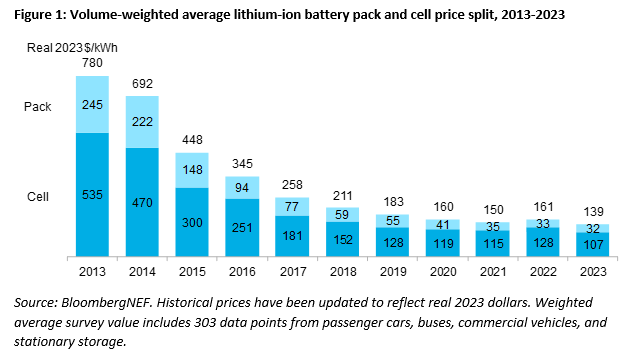
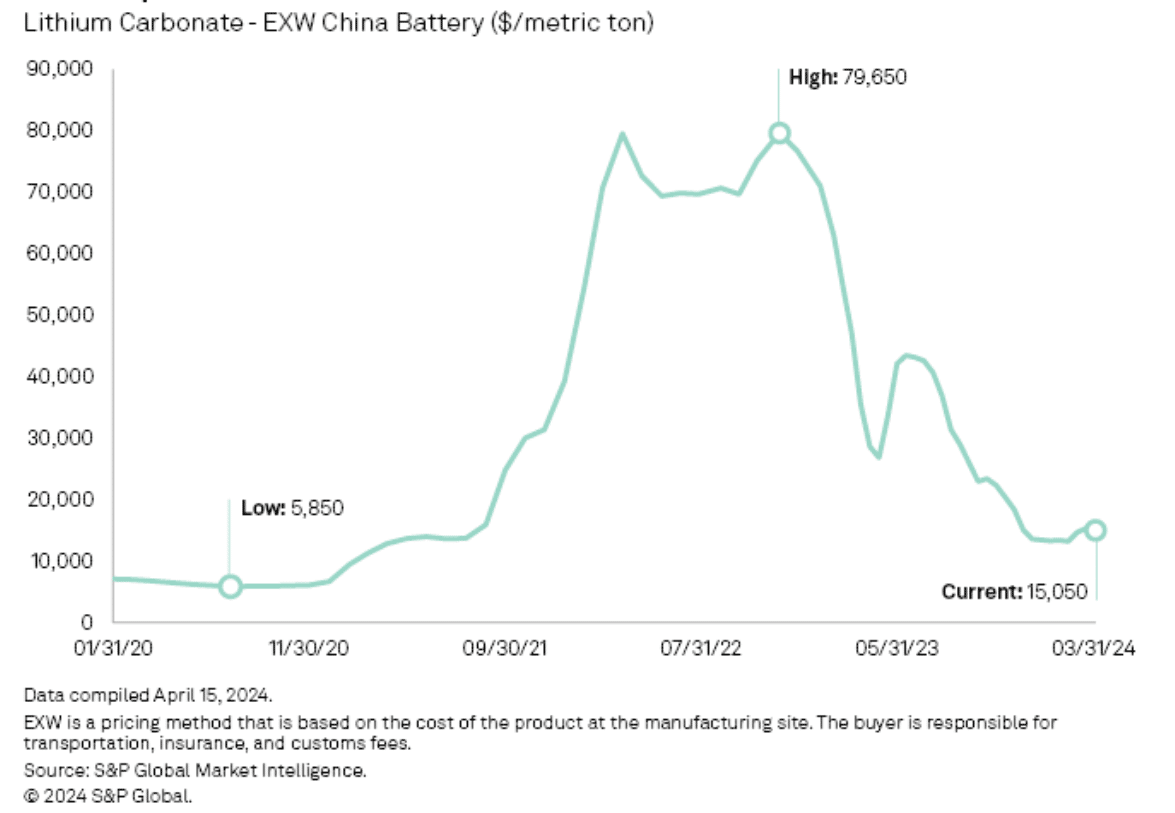
Moreover, it is prudent to avoid relying solely on a single technology. Currently, lithium is the only type of storage that is commercially viable, and hydropower capacity in Europe is nearly maxed out. Additionally, a significant portion of lithium supply is controlled by China, which poses its own set of challenges:
I am optimistic about the future of storage technologies. If prices continue to fall and production increases, we could potentially use these technologies to better manage daily energy peaks by 2050.
However, achieving affordable and efficient seasonal storage remains a distant and costly goal.
It's also important to acknowledge that while storage technologies exist, they have yet to meet the ambitious targets we are discussing anywhere in the world, the data are promising, but they say nothing about what might happen in the future.
They most definitely are not there to take up overnight baseloads. I don't think the economics has been fully baked out yet. They are certainly rolling out but often times to replace the function of a peaker plant not a baseload plant.
Virtually all neighboring towns have normal radiation levels. Even 3km from the plant, some spots show higher radiation levels (5μSv/h), which is roughly twice the dose limit for someone working at a plant. However, these areas are uninhabited, consisting of trees and roads, and are harmless even if you walked by them every day.
The only significant disaster here is the economic one, amounting to several tens of billions of dollars. But in total the earthquake generated 360 billion dollars in damage.
It would be interesting to see a chart showing the % share of electricity being used for real world activities versus abstract computations. The current AI wave reminds me of Bitcoin.
You have to wonder if humans actually need all that processing. It would seem we have more intelligence than we need; every aspect of our lives is already over-schematized. We don't need more control and more advanced abstractions to keep our minds busy, we need the opposite; less control and more time. I hope things will shift more towards using AI to solve physical problems.
There is no free lunch . Humanity has to pay a price for everything esply if we want to go against or want to outdo Nature which has taken billons of years to provide us with whatever we need for our happy survival. But humanity is invested with insatiable curiosity and want to know what's on the other side of the mountain, even at the cost of our survival and land ourselves and mother nature into trouble . But that's OK . We are what we are !
I know it will go over your head but the scheme in Texas that bitcoin miners take advantage is not isolated to bitcoin and is used in other industries there as well. From a electric market perspective it makes sense, ignoring the functionality of bitcoin mining. Having industrials that can dynamically adjust their use is very helpful for electric generation.
>I know it will go over your head but the scheme in Texas that bitcoin miners take advantage is not isolated to bitcoin and is used in other industries there as well.
Where did OP say that? They said _power suckers_, as in plural and used bitcoin mining as one example. It’s strange you started your comment with an unnecessary personal attack and assumption OP is an idiot when you didn't seem to understand their comment. I dont understand why you had to take it so personal. Unless you're part of ERCOT or a energy supplier, I guess, but even that's not a good reason.
My point is that power suckers serve as part of a healthy energy grid because they are able to somewhat time their use which helps for overall grid health. I am not sure how well that would play into a data center, so I think the original comparison to AI is weak but nonetheless from the OP bitcoin perspective it is.
Your comment didn't upset me. But it seems my comment upset you? Please don't project anything. It's just strange to take a random comment so personal. And I understand your point, but I dont care about that part.
I'm always late to the comments as I am busy elsewhere, apologies. For those creating energy solutions I encourage all to listen. Start @ 02:41:25
www.youtube.com/watch?v=O4Skit8Jwhw
Mr Pfluger of Texas
"Are renewables baseload capable?"
Dr Lott
"Renewables are not 24/7/365 capable in an economic way, technically as an engineer I can design you a system but then we have to pay for it. So what we find is you want a mix of renewables because they are cheap when they are there, you want to compliment them with storage and you want compliment them with firm dispatchable power that can be there 24/7/365 and design the markets to that everyone can get paid effectively to keep their systems well maintained and online."
...
Hon. Clark
"With regard to the RTOs, taking off from where Dr Lotts was, I agree with everything that was said, there be mix of efficiency, demand response, solar, batteries, renewables and dispatchable capacity designing a market around that is extraordinarily difficult because the markets are designed to run what's cheapest to run right now and that has been a 20 year process trying to get those market signals correct."
In the end someone has to take the risk and do it as our world is only the way it is today because of entrepreneurs that took the risks. This forum has more than a few serial risk takers I deduce, including myself.
When you have production at a power station, your problems only start. You need to carry that power somewhere, and it takes time.
Also, you have to upgrade every path between the power station and your data center. It's not like flicking a switch. Your standard power budgeting doesn't take a multi-megawatt data center into account when it's first made.
And power budgeting is not on paper only. It affects from power generation schedules, demand curves, infra planning, etc. It changes literally everything.
I'm a sysadmin at a multi-megawatt datacenter. We work with authorities for finding solutions, plus we also provide computational support for calculating generation schedules across the country.
Very few places banned crypto mining from wasting energy when it was the "bubble of the moment", so I doubt that anything will happen for AIs (that are — at least — not as worthless).
They are monitoring the marine life for trends, abnormalities and such. Plus these models are used for better prediction of future events/cycles with greater accuracy with simpler measurements.