This accurately catches the reasoning behind my approach to testing though. When you fix a bug, write a test that reproduces the bug first. That way, when someone tries to refactor the messy code, they'll know that they broke something that was causing a real big.
I generally try to have two type of test: nominal "happy case" tests that verify basic functionality of modules when used in a normal way, and bug fix tests that are labelled as such, with a reference to the bug in the bug tracking system. So now when you see my warty code and try to clean it, the test fails, and you can even find a description of the original problem that the warty code addresses. Now you know that you either have to find a cleaner solution, or just leave the warty code alone.
This system means that most of the tests I write are targeted at things that really cause bugs, not just busy-work testing of things that would never go wrong, but rigidify code bases (the more tests you have, the more you have to modify when refactoring, and how do you know if the test or the code is wrong during the refactor???)
I was just going to down vote you, that's all trolling deserves on HN, but on the off chance that you're just ignorant, and not actually trolling:
1) there are 5 OSes with more than 100million users. Apple makes two of them
2) there are 4 major web browsers out there, apple makes one of them
3) there are 3 major office suites out there, Apple makes one of them
Apple is one of the biggest software companies in the world. I suspect they are second only to Microsoft in that regard, and yes, I do include Google in that assessment.
Stick with the pricing. The application is niche, and as such should have a higher price. It has been noted many times over that software has a bimodal pricing scheme - very cheap for off the shelf software, and very expensive for bespoke software. But of course, that's the black and white view of the world. The more 'niche' your off-the-shelf software is, the closer it gets to being bespoke, and the price should rise accordingly. It works in the other direction as well of course - if you can build an application by simply tweaking an existing framework, such as building a website using Squarespace, then this should cost much less than true bespoke software.
All of which is to say that I feel that you have the right approach to software pricing. I hadn't realized this exists, but I may well become a customer in the next few days - I have been looking at options for creating UML documents in code.
One thing though, do you have a re-import feature? This is the killer feature for me - I would love to be able to create a URL diagram in your app, paste it into the top of a source file, and then copy it from the source file back into the app for modification later when the code changes. I realize that this is a tricky problem to solve, but solving it takes this from being a toy to being a true industrial tool from my perspective.
Wouldn't you just use Siri for that? I have enough apps that it's mostly too hard remembering where all but the most commonly used live, so I just tell Siri to open the app. Works like a charm.
Whilst it is true that there has only been one launch abort so far, if the Shuttle had a launch abort system it would have saved the seven astronauts aboard. Just mentioning this in case someone mistakes your post as arguing that launch abort systems are rarely useful.
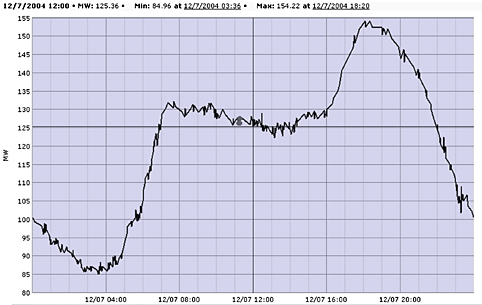
That's not at all what that report says. The graph in the report is talking about the energy usage and production of one household, not global demand. Peak global demand of energy in Australia is very much in the middle of the day as offices and other workplaces run aircon / lighting / computers / industrial processes.
Paris already has a very successful shared electric car device called Autolib. I use it at least once a week, and it's brilliant. The scheme works because the battery has a range of about 150km, but the typical trip is only 5-10km. The systemight not work as well in less dense cities.
Wow, this is interesting: they use a car that I haven't seen mentioned before. It has a range a bit longer than the Leaf. In low-speed urban driving it's good for 250km range, or 150km on the highway. Given that it's mostly used for short trips in cities, that's enough that it will probably last an entire day, and then charge fully overnight.
Is this news? I don't know about anyone else, but ever since my undergrad days, I see repeating patterns in nature and I just say to myself "oh, there's another partial differential equation"
I guess most of nature is described by differential equations, starting with fundamental physics. So in the end, that statement does not add much. It is the kind of differential equation that actually matters. In this case it is a non-linear DE, which means that it is probably not really a fundamental process, but a more complicated, derived process.
Besides, there are also non-repeating patterns in nature that are governed by differential equations. Very basic examples are the temperature across a heated room, and the voltage across a resistor.


I generally try to have two type of test: nominal "happy case" tests that verify basic functionality of modules when used in a normal way, and bug fix tests that are labelled as such, with a reference to the bug in the bug tracking system. So now when you see my warty code and try to clean it, the test fails, and you can even find a description of the original problem that the warty code addresses. Now you know that you either have to find a cleaner solution, or just leave the warty code alone.
This system means that most of the tests I write are targeted at things that really cause bugs, not just busy-work testing of things that would never go wrong, but rigidify code bases (the more tests you have, the more you have to modify when refactoring, and how do you know if the test or the code is wrong during the refactor???)