This idea that wealth is somehow related to creating value, and these kinds of incentives are necessary in order to induce people to do this kind of work, is a deliberate marketing ploy, and a fairly recent one at that, pretty much dating back only to the 1970s or so. Before that, the kinds of professions we today associate with being "rich and famous" (as if these two things were inherently related to each other somehow) -- actors, sports players, inventors -- were not particularly well paid. Before the 19th century, there was no such thing as a professional athlete. There were professional actors, but that was considered a borderline dishonorable profession. The history of invention since the industrial revolution is chock full of people who made important technological or scientific breakthroughs who never made a dime off their work. Most early science was done by people who were already rich, mostly through inherited wealth, or people who, like today, had wealthy patrons. The truly rich were, still are, and have always been, the ones in a position and with the inclination to bend the system to their advantage by whatever means they could.
> Before the 19th century, there was no such thing as a professional athlete. There were professional actors, but that was considered a borderline dishonorable profession.
And that changed with TV (and cinema).
In the 19th century an actor can play in front of one or two hundred persons each day at most. Now a good movie can be played in front of millions of persons. The same changes applies to sports.
It’s not that different today the vast majority of actors today are not rich or even well paid.
A list actors are and that hasn’t changed at all.
Historically “traveling” actors were often looked down on not that differently than say street performers or your Hollywood “acting waitresses” that gets a few gigs a year as an extra.
You know who else didn’t get paid in the 19th century? Computer programmers.
Things change the reason why entertainment professionals are paid more these days is because we have the ability to leverage their product through modern technology and the fact that the abundance of resources that even developing countries have today allows people to value entertainment.
And no most scientists were not rich by any means outside of a few in the UK many of them were quite poor and were often living on a stipend provided by institutions or private patrons.
And sorry to burst your bubble but A list actors historically became very wealthy in countries where entertainment was appreciated.
It's true that economic conditions change with technological advances, and that the general trend is that fewer and fewer people are required to meet the demand for any particular product. It does not follow that we as a society should adopt a policy that those who manage to capture markets are entitled to a proportionate (note that I deliberately did NOT say DISproportionate) share of society's wealth. Most of our social mores were designed under the assumption that production, not consumption, was the limiting factor in our economies. But that is starting to change. If we don't change the rules to accord with this new reality it will cause serious problems. If only 1% of the world's population is required to meet 110% of the world's demand for everything (and that could very well happen within our lifetimes), what are we going to do with the remaining 99%?
The problem is then what is proportionate and how do you estimate it?
Should Apple be taxed more than Google? Should an actor that gets paid 10 million dollars for a movie be taxed more than an actor who’s paid 5?
What if the actor that is paid 10 is has 5 times more views just in less valued markets?
Should I who works as an engineer for a financial institution be taxed more than an engineer working for SpaceX or NASA?
Proportionate is easy: if you're making money in the free market, then manifestly what you are making is proportionate to the value you are providing to someone. The problem is that some people's contributions measured this way are wildly disproportionate to other people's contributions. A movie star really is providing orders of magnitude more value than a McDonalds cashier. The question is: should a movie star therefore be entitled to orders of magnitude more compensation? It's not clear that the answer to that really ought to be "yes".
Proportionate isn't clear, again don't mistake the dollar amount they pay in taxes with their tax, while we cap taxation for a good reason as progressive upto 100% is a very bad idea.
And yes it is clear to anyone who studied economics, and more importantly it's really depressing that you are using these populist arguments how about replacing the movie star with a doctor? Is it ok we pay a doctor who spent the better part of the first 30 years of their life becoming one and would spend the next 30-40 years being one more than a worker at McDonalds who's only required qualifications are to not set the building on fire and being able to say "do you want fries with that?"
The sad truth is that you wouldn't find people that are successful and do no work hard even those kardashians that you seem to adore so much.
I mean, it is still related to value in the economic sense, but not necessarily the intuitive sense. For example, the Kardashians are certainly "worth" less in cultural value than custodians, but their economic value is much higher because they're much more scarce/have much higher demand. I think that this concept is something that many people on both sides of this debate haven't really taken the time to think about. It definitely does invalidate a lot of the statements like "poor people are just lazy" and it does highlight that capitalism is an ugly system. But at the same time (roughly paraphrasing Churchill) "Capitalism is the worst form of economics, except for all the other ones"
It's true that the Kardashians are in high demand. It does not necessarily follow that we as a society should allow them as a consequence to accumulate disproportionate wealth and influence. The incentive argument in particular falls apart here. Do we really need to pay the Kardashians a boatload of money to incentivize them to do whatever it is that they do? Or would it be OK if we taxed the shit out of them and took the risk that they would quit as a result? That seems like a no-brainer to me (in every possible sense).
> Do we really need to pay the Kardashians a boatload of money to incentivize them to do whatever it is that they do?
That's a good question. I personally don't think so and don't pay them myself. But enough people in our society clearly do, and as long as they have the freedom to chose where they spend their money they should be able to chose to spend it on the Kardashians right?
The question of whether (or how much of) the money they accumulate should be taxed, I believe is a separate issue. I think we could tax the shit out of them, but I would caution against the notion of taxing them more than others on the basis that they're creating less "value" than other rich people. There are clearly plenty of people who highly value whatever it is they produce, and to tell those people otherwise seems like dangerous territory (at least it seems like non-democratic - i.e. when you have a government telling the people what to value).
Yes, I totally agree with this. But I believe there are actually very few people who are actually creating value who would stop doing what they are doing if they were taxed more. The few that do quit, I'll wager there are people willing to step in and take their place. It's a risk I'm willing to take.
This argument is simply frightening first how do you define who creates value? should we now have a citizenship score?
Secondly the vast majority of people who work freaking hard jobs would quit if they would be taxed to the point where taking a lower paying, less stress simpler job would be as beneficial.
Nearly everyone would quit their job if it would be more beneficial to take an easier job that pays just as much, i think you grossly overestimate the amount of people that are that driven by their career that it would take precedence over their actual life.
And ok say you weren't planning to go the final solution route just yet, why should I be fired for just wanting to exchange my time for money based on the maximum (in my pocket) market value I can extract from it?
Is it more morally superior to be so devoted to my job that I would do it even for free or for nothing more than minimum wage? that's some really fantastic way of life you got there....
I didn't say you should be fired. I said I would be OK with you quitting voluntarily.
Also, we have had much higher incremental tax rates in the past (notably in the 40 years between the end of WWII and Reagan, and the U.S. economy did just fine, so I see no reason that should be any different now.
I'm not in the US but last time I've checked the top federal tax rate today is higher than it was in the Reagan era.
The federal income from taxation (as % of GDP) remained fairly since WWII stable: https://en.wikipedia.org/wiki/Income_tax_in_the_United_State...
But sure i'll hear you out what tax brackets do you think we should implement? where do you put the cap?
Scroll down to the bottom of that page to the "Income tax rates in history" section. Observe that the top marginal rate was as high as 91%, and did not drop below 80% in the entire period between 1936 and 1981.
I know what it was but that wasn’t ever in reality actually the case almost no one paid the exesses taxes during, heck forget almost no one paid that marginal rate.
That's true, because almost no one made enough money to pay it. That's one of the reasons that it wasn't harmful.
> So you want 91% tax from what amount?
I dunno, $5-10M or so. I also think that you should be able to defer the recognition of income so that you don't get dinged too heavily for one-time windfalls. But I think anyone regularly making $5-10M/yr should be paying a lot more than they currently do.
My other comment got deleted cause this was flagged while I was typing it. As someone who disagreed with the premise of the article, I'm ashamed that someone else would partake in censorship of this opinion. HN is not for one side or the other, and the expectation coming into HN should not be only finding people who agree with you. I'm certain that most of HN's audience disagrees with Paul Graham on fundamental political issues (including the fact that he disagrees with this very opinion in the article), and yet that hasn't turned HN into an ideological echo chamber where everyone disagrees with him. Flagging should be saved for spam or flame wars, not routine discussion of political issues relevant to startups.
That tagline made me cringe. Redistribution of wealth is not just about enjoying the fruits of someones labor.
It's about giving a larger group of people the chance to use those resources and that safety net to contribute back to society and maybe even become one of those super rich whom the article is talking about.
I agree with the author that the people on the top aren't different than everybody else. They just managed to get to the top. Those skills and that drive can be found in people of all social layers.
So it's not about getting to the top. It's about getting there by contributing back to society.
Most of the article seems to try and justify taxes. I'm sorry the climate is so bad that taxes need to be justified.
Where I'm from in Europe we see a lot of young entrepreneurs and musicians mostly because we have a strong safety net. You can drop out of school and focus on your music without living homeless, and without having rich parents/sponsors.
Then you can change your mind and go back to school without falling into massive debt.
This gives more people the chance at making something of themselves and thereby contributing back to society at some point. Instead of harshly casting them out of society with crippling debt or just living hand to mouth for the rest of their lives.
There's a bunch of statistics that show the US is not particularly entrepreneurial.
The US does have very high levels of VC investment, a large single market with (often) consistent regulation and language, and this helps startups survive more than they do in Europe.
I sometimes think of starting a startup back in Australia, but it always seems like a bad idea because of the lack of VC and lack of customers.
But I think the US should see this as an opportunity, if the US had better policies, we could get better outcomes than even now, because we have a lot of non-policy benefits already!
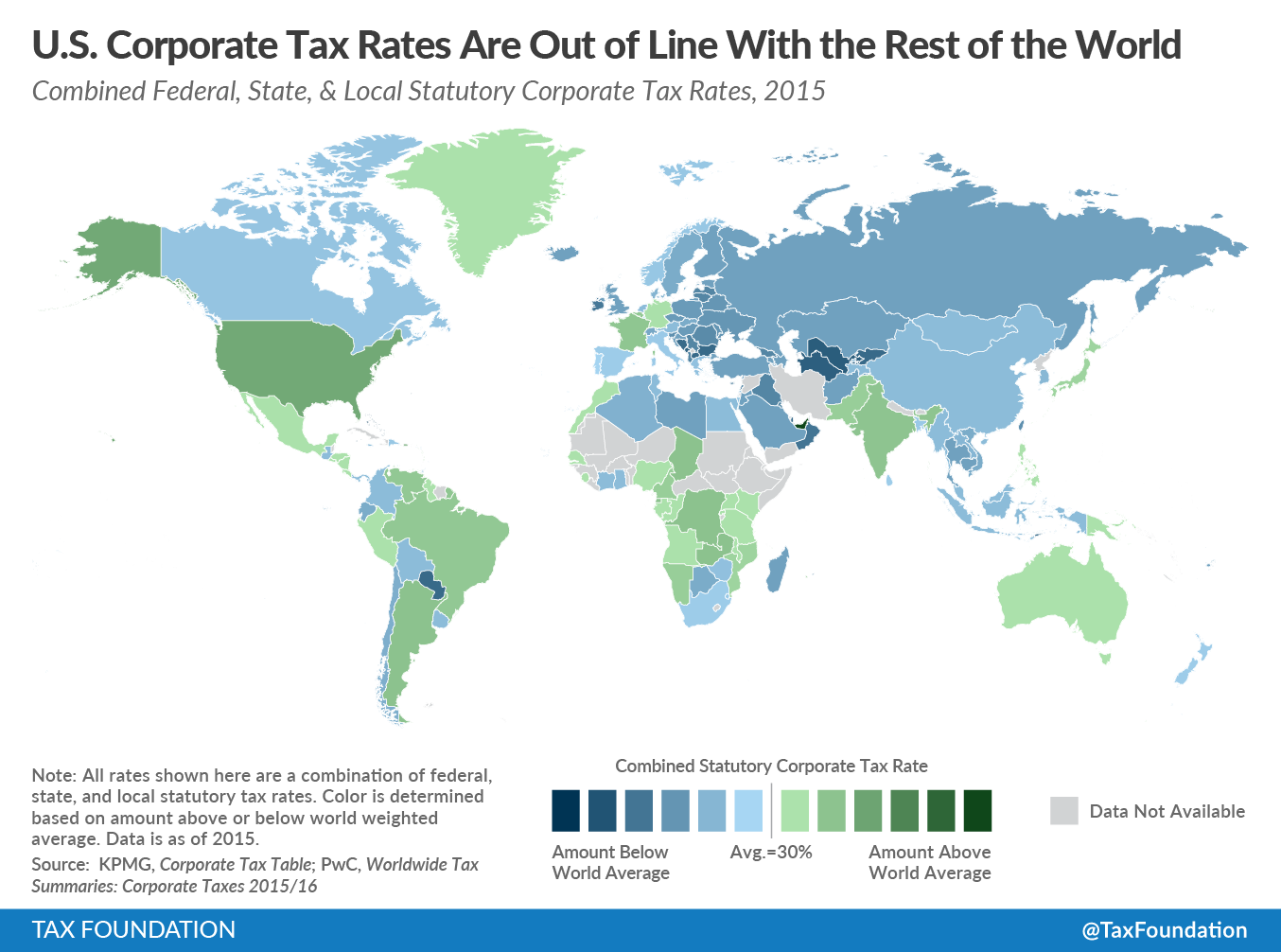
To be fair though, a lot of the more advanced European countries have much lower corporate tax rates than the US does (or at least did). E.g. Sweden's is 22% and there's no state corporate income tax rate on top of that. In fact, the US was one of only a few highly developed countries with an above-average corporate income tax rate until the recent tax cuts, with higher tax rates than all of Europe, China, South Korea, Japan, Australia, Canada, etc. [1]. There are a lot of data indicating that low corporate tax rates do just as much if not more than low income tax rates to spur innovation/entrepreneurship.
I don't think high corporate taxes make sense, but I'm not convinced they would have much effect on entrepreneurship. By definition they are taxes on profits, and corporations can deduct a lot more from their taxes than people can.
As someone who has considered starting a startup, corporate tax rates have never really concerned me since the biggest hurdle is just getting back a comparable salary for myself, and anything else, e.g. smoothing income over multiple years, is just gravy. I don't think this logic would be very different for more traditional small businesses either.
> It's about giving a larger group of people the chance to use those resources and that safety net to contribute back to society
Safety net is great, but if someone already showed an ability to turn resources into more resources, it makes sense to leave a large part of the resources to them, so they can do it again.
At large corporations it always seemed to me the people who got promoy into the executive track were 10% people who were really good at their jobs, 90% people who were really good at convoncing their boss they were really good at their jobs.(aka managing up)
It won't matter in the end, and I know people like to keep saying that it's not a zero sum game, but eventually when the ecosystems are ruined and worldwide hunger is the norm (again), they'll see that the size of the pie can't keep growing exponentially.
I mean, if that's your logic about this, does the system even matter? If we're eventually gonna hit a stopping point that reverts us back to starvation then it seems like everything is an equally bad choice.
85% of the taxes are paid by the top 20% because the bottom 80% are so comparatively poor. Note that almost 40% of taxes are paid by the top 1% - knowing what the top marginal rate is, that should tell you just how much more they make than everyone else.
The article even mentions very explicitly that capitalism hinges on the state's ability to protect private property, regulate markets (tort, antitrust), and create infrastructure. Why should the people who most benefit from this system not have to contribute proportionally more?
How exactly are the rich not contributing more, if from your own statistics, the top 1% pay 40% of the taxes, and also pay more % of their income as taxes?
New money comes from risk. It is created at the time of lending and said risk is valued. Basically, does the loan stand a chance of being repaid?
Right now, stats vary on this, but I saw one recently citing 140 million Americans at poverty level or below.
It is very clear, regardless of where one falls on all of that, very large numbers of people, and growing numbers at that, cannot participate meaningfully in also growing numbers of markets.
Their appetite for risk is nil, as they struggle to meet basic needs. Their liquid dollars are also nil, as what comes in goes right back out. A majority of Americans cannot handle a $1000 unplanned expense.
Credit only goes so far too.
On a moral basis, I find the idea of extreme wealth on the rise, while so many people really struggle, dubious.
But, just as a matter of economics, does it not make sense most people should be able to make it, even take some risk when they are working full time?
Who will buy the stuff otherwise?
Keep the money. By all means make more. But, maybe, just maybe paying people enough to participate goes along with the deal too.
Or, if not, why bother?
Failure on the wage front, measured by people unable to make ends meet
, and or,
put another way, failure to actually make it cheaper to live, those productivity gains, greater efficiencies not playing out as real for way too many people, unable to make ends meet on basically flat wages for decades now
, both combine to limit growth, increase overall costs and risks.
These manifest as crime, over dependence on safety net programs, limits on many new products and who can afford them, and a decline in standard of living for many over time.
The basic deal on all this is improvements for everyone in return for great profit and economic freedom for those getting it done.
Great! I am a believer, except for the growing number of Americans in real economic trouble. That kind of growth is toxic. It comes with costs, qnd even larger opportunity costs.
It is all those people checking out, not buying new cars, homes, starting little businesses, not making the next best thing in their garage that will really begin to add up now.
I want the super wealthy to carry on. Go make more. It is OK.
But, I also want those people able to participate and live modest reasonable lives too. As a nation, we will be so strong, capable, innovative...
I feel strongly that somehow capping wealth will not end well. Existing wealth, if no one else does, will fight that.
As they should.
Which leaves the question of labor, which just needs more, or just needs life to actually be cheaper to make things work well.
Some portion of people will fail. I get that, and we have safety nets and such for them. They are not in discussion.
No, this is about a growing body of hard working poor. Automation is not yet able to rid us of basic labors. And we all need those basic labors done too.
...unless we want to have to do them ourselves. I do not. I can do less basic things, and I should. So should everyone here.
But, our garbage people, food handlers, cleaners, diggers, builders, etc... have families too. Our kids probably play ball together.
I have said enough.
Keep the money, make more!
But also give some thought about how it actually gets cheaper to live a modest life, with dignity, family
, or
How do we get those basic labors better funded?
Either can work, and either will improve our growth, standard of living. As more people can participate in the growing number and scale of markets, the investments in them will deliver very nice returns over time.