Yeah there’s more money floating around, so perhaps more people want to spend it, but why? Most people aren’t getting materially more stuff or even need that much more stuff, consumption’s already god damn conspicuous.
Maybe everyone can afford a jet ski all of a sudden? No, the stims didn’t really do /that/ kind of wealth expansion.
To me, this still looks like the bullwhip effect, which is expected to have an outsized effect on demand over at least a year or two.
Buyers, who got used to “just in time” shipping, got spooked by shipping delays and shortages from their suppliers, because of supply demand imbalances during shutdowns, and as a response they all put in orders for 2 to 3 times the amount they usually buy from their suppliers with the intent of rebuilding domestic stock so they don’t miss out on sales.
People used to spent their money in restaurants, bars, cinemas, theaters, parties, festivals, massages, hairdressers, and a bunch of other services. If you add lockdowns, many things happen:
* people have leftover money, that they instead spend on "things"... and since they're used to using less services, this is also true for some time after the lockdowns
* If you're stuck at home, you'll buy stuff that makes that nice... a better tv, a game console,...
* Some lockdown policies directly affect your 'need for stuff' - school from home? Kids need their own PCs, you need to buy a scanner and a printer for them,...
* People working from home also have more free time, and decide to do the long delayed house work and projects - so people buy more construction materials (also people want houses outside of cities, because it's nicer to be there during lockdowns), so prices of that go up too
* and last but not least, manufacturers fuck up their orders, don't have stock buffers, and fail horribly
Typical growth in household checkable deposits/currency/savings deposits was around $500 billion/year during the mid-2010's. last year it was... $2.6 trillion
>Some lockdown policies directly affect your 'need for stuff'
I think this was the root cause of the toilet paper shortage. People who normally spend a large portion of the day at the office were now spending that time at home. There was a popular viral video at the time of a man driving around on a forklift in a warehouse full of toilet paper laughing about the shortage, but it was all commercial toilet paper not what you would use at home. Anecdotally I noticed a correlation between the level of traffic on the freeway and the amount of toilet paper on store shelves. When the freeways were empty the shelves were bare and as traffic started picking back up the shelves started replenishing.
After the panic buy I've never seen a toilet paper shortage anymore. I therefore doubt your theory of correlation. Maybe it was so in the us but it definitely does not correlate for everyone.
It took forever for it to get back to normal here. There was limited TP available after the initial panic, but it took months to get anything decent on the shelves. I was ordering it online for a while.
48-72 hours after the initial panic my local large food store had literally more toilet paper on the shelves than I have ever seen in there before. However it was all super low quality and from brands I've never seen before or since.
It's the cheap stuff that you normally find in the bathroom at an average office building, fast food place, etc.
With the world shutting down the companies that supply those kinds of places had a warehouse full of inventory and most of their usual customers either were entirely shut or going through a lot less product.
I'll wager your grocery store called one of them up and got a few pallets to resell, creative move on their part.
Back when I used to use toilet paper, I would sometimes encounter a kind which would fall apart while I was still wiping, breaking up into a bunch of tiny "rollies" which would, as you may guess, would remain stuck to my butt. It was one of the "extra soft" brands, I think.
The root cause is that toilet paper is bulky and the stores simply didn’t carry as much of it as (say) tinned goods.
It didn’t take a big demand increase to start seeing gaps in shelves, and once that happened a degree of panic took hold and even though there was plenty in stock in warehouses, it wasn’t able to be distributed fast enough.
The difficulty is that the big supermarkets have got their supply chain down to a fine art and it only takes a small fraction of people to start buying an extra here and an extra there for it to start having an impact and they then have to struggle to keep up.
People really underestimate how small the slack is/was in parts of the supply chain.
I remember a couple of years ago when we had a lot of snow (for England) and it kiboshed the supply of things like milk and bread for about a week, even once all the roads were clear.
You only need a chunk of people to buy a few more toilet rolls than they usually would "just in case" and suddenly the shelves are empty.
Toilet paper is bulky for a store, but it's non-perishable, so under normal circumstances people buy a couple of month supply and return to the store when it runs low. The COVID shock meant that everyone replenished their TP supply at once, which screwed up the system by increasing demand x10.
That and I believe I read that most people used the stimulus to paid down/off debt [1][2]. I would suspect at least a portion of those used that opportunity to also take on more debt down the line as jobs came back
The causes of the lockdown shortages are cultural, toilet paper disappeared in Northern European and English speaking countries, while in Italy (and I think in some places in Spain) yeast could not be found.
My experience supports that - on public transit alone our family saved more than 5k USD last year, it would’ve more than made up for any equipment I would’ve had to buy (turned out though that I already had everything needed to work from home).
because of remote work, I have to heat the house 7 days per week, instead of about 0.25*5+2=3.25 => that's about twice as much. Given the rise in energy cost, this will have a huge impact.
At the same time that is largely a problem of the colder areas. In more sane (temperature wise) places, that energy cost is negligible.
Also, that assumes you are the only one (or the other person (s) in the house have very similar schedules) in the house.
An assumption which if you have a house wife and a few kids, is largely invalid
What everyone is going to have a real hard time wrapping their head around for the next few years:
We built a highly efficient economy for a set of behaviors. A shock happened that caused a lot people to change their behaviors (probably for a long time, since they've had 2 years of 'practice').
Our economy, which was built for those old behaviors (living in cities, riding public transit, eating at restaurants, travelling internationally, etc.) is doing a bad job of adapting to new behaviors (Living decentrally, driving more, ordering out more, travelling locally. etc.) because we used to think 'People don't change very fast, we can build a just-in-time economy.'
But here's the thing about cycles, soon things will adapt to those new baselines.
Companies will carry more inventory. (until a new generation of FP&A underlings forgets what a pandemic is)
Not enough steel to make enough cars? Here's my amazing ' Airbnb for cars' startup (Hey Sand Hill, did you know, dollar for dollar, they are the most underutilized asset in the world?).
Natural gas extremely expensive? Let me introduce you to renewables, which btw are getting better and better every year.
It may be a painful few years to navigate that transition, and Bridgewater's (weak) point here is that 'hey, consumers are changing behaviors' and nothing more, which to me is a great reminder why this is happening: https://www.bloomberg.com/news/articles/2021-09-02/dalio-s-h...
> Natural gas extremely expensive? Let me introduce you to renewables, which btw are getting better and better every year.
Shutting down a natural gas pipeline that people depend upon just before winter, and then lecturing them about solar panels is not a good look. Artificially increasing the price of natural gas causes famines, it causes food and fertilizer to be more expensive, and it makes it hard for people to heat their homes.
But one thing it doesn't do is increase reliable renewable energy sources. Solar is not a replacement for home heating oil during the Michigan winters. And renewables do not spring instantly into existence out of suffering. Another thing it doesn't do is help the air, because instead of this pipeline, we will need to run 5000 trucks per day from Canada to the Midwest to deliver that natural gas in time for winter. So it's a good thing we don't have a shortage of truck drivers or any supply chain issues.
This idea that we should be punishing end users who need to heat their homes and buy fertilizer instead of actually deploying reliable alternatives is a form of scolding eco-sadism. It may be fine for you to absorb an increase in home heating oil prices, but other people really suffer. It's pure mismanagement and very much has a "let them eat cake" vibe.
> It may be a painful few years to navigate that transition
The pain inflicted on households in the midwest will be returned with interest in the next election. The next time you wonder why it's 2050 and the US hasn't raised any gas taxes or instituted carbon credits, or really done much to reduce CO2 emissions, then remember that to pass a green agenda you need to win battleground states like Michigan, and then remember back to this moment and the kinds of finger wagging lectures that were being delivered all over the country to people worried about how they will heat their homes in the winter.
I sympathize with this, but if climate experts are to believed, we’ve stalled to the point where we have perhaps a decade to get emissions under control in order to meet targets, and most countries haven’t even begun to make significant changes. At some point there will be pain. The question is, “do we want a little pain now or a lot of pain down the road?”. And to be clear, “wearing a coat inside during winter” may just constitute “a little pain” compared to the famines and wars that are likely if we fail to get our emissions to zero in time.
"we have perhaps a decade to get emissions under control"
Every year we're told it's our absolute last chance. Environmental brinkmanship hasn't work and the tune needs to be changed. Literally no economies are planning for mass famine or wars because no-one actually believes that is going to happen, except religious cults.
Because every year IS our absolute last chance. Each emitted ton is there "forever" (at least for multiple centuries). Climate change can be stopped (like, paused indefinitely) but can't be reversed.
You are right that there is no absolute deadline. Now we are stuck with our hotter summers "forever". But we are not yet stuck with what comes next.
> no-one actually believes that is going to happen
That is the problem exactly. We do not listen to scientists, because it's more convenient to ignore it. And when their models become reality, we'll just blame them for it, as they "knew" and did not prevent it.
All I'm going to say is always look at where these 'scientists' are getting their funding from. I'm not a climate denier, but realize much of the NGD is really a redistribution of funds. Driving EV machines will still require electricity, most of which is still generated by fossil fuels. Then there's the quagmire of what to do with spent batteries. The Earth has heated and cooled over millions of years, so I really doubt we're at the point of no return.
>Driving EV machines will still require electricity, most of which is still generated by fossil fuels.
Most, compared to all. And power plants are much more efficient at capturing energy than internal combustible engines. I see no real issues with the technology, just small kinks to be worked out, which is expected
Every year the goalposts move a little bit. Thirty years ago the goal was ca. 0° of global warming. Now we're debating whether we can muster the political will to limit warming to 2° (unlikely) or 3°.
Right. They want regulation...but NOT THAT REGULATION!! No one will be able to agree on anything as politicians bounce between big donors bitching and various voter poll data.
Somewhere out in left field are the right things that need to be done.
1. The same thing could've been said about the Covid-19 pandemic back in February 2020. In fact, a certain American President said as much. The fact that people are incapable of envisioning major disruptions to their lives does not prove that scientists are wrong; it's proves that humans can be blindsided by their own biases.
2. Countries don't plan their economies half a century ahead. Most struggle to plan beyond the next election cycle.
I have was a denier of: CO2 emitted by humans causes global warming until I studied chemistry. Then it hit me. The earth is warming, we are making it warm faster. This place is normally hot...we are making it worse.
The claims sound fantastic if you don't have a solid education. The people you are trying to convince do not have an education that will allow them to understand for themselves. They fundamentally distrust the people trying to convince them. There is no "to be believed." That has already reached the saturation point.
In democratic countries, the answer to the question of "do we want a little pain before the elections or a lot of pain down the road?" is quite clear - if you accept the pain now, you'll get voted out and get replaced by someone who will proclaim that the pain isn't needed, promise to undo your measures and kick the problem even further down the road to some other future government.
> You seem to think the unpleasantness of the diagnosis and remedy gives you and yours an out.
This is such an interesting observation. I had always thought that with a dire enough problem, humanity would band together and come up with a solution at all cost.
But after observing the worldwide response to the pandemic, I’m quite sure the world will become engulfed in wildfire and famine while a notable fraction of the population continues to insist that “this is normal and everything is fine”.
It’s an odd situation where magical thinking (“it can’t happen to me”) negates self-preservation.
The IPCC has been making dire predictions now for 3 decades. Can you point to any that came true?
Off the top of my head I know that
1. Glacier park was to vanish by 2020. Its still there, barely changed, some glaciers shrank, others grew.
2. Sea level didn't rise as expected.
3 Polar bears are strong, and are not on the endangered list.
4. Temperatures did not rise as much as expected. We are still way below the Roman and Bronze age warm periods.
5. Damage from weather has increased in America, but that is a result of a policy to rebuild, instead of abandoning areas prone to bad weather. Increasing the probability of being damaged by bad weather. Actual weather severity has not changed much.
6. In school, I was made to feel terrified of desertification. The opposite happened, the deserts retreated. The globe is greening.
As I said, that is off the top of my head, but it can all be backed up by data. Or prove me wrong. Can you show me a few ipcc predictions which actually came true? Thanks.
The IPCC does not make predictions. Never has, never will. The whole point, which real climate scientists repeat as nauseum, is we can never know absolutes because of the huge number of variables and timeframes. So what they do instead is provide scenarios. And each scenario has a series of weightings or probabilities. The summaries spell these out in rough terms, the full reports go into intricate detail and sources. If you spend the time to read the summaries you will find a good number of scenarios which are currently playing out as we speak.
Thousands of researchers making predictions with ever shifting probabilities is what you call unfalsifiable.
The predictions we’re talking about play out over decades. The sources cite other predictions. It’s a feedback loop of assumptions and peer review from people who you know already share the same assumptions.
Climate science is much more akin to sociology than a hard science.
Except climate science has tons and tons of hard data that the models need to agree with to be publishable, whereas sociology has questionnaires administered to a group of 20 sociology students.
> The idea that we should eliminate fossil fuels is truly a privileged take.
It is, and it's our only option. It's the reason nobody is doing a lot to combat climate change: because it'll require a lot of tears, effort and money, and nobody wants or can afford to spend them.
At the end, it's always the poor that have to pay. It's always been like that. Doesn't make climate change any less real.
Climate change is indeed a justice problem and we should optimize for justice rather than just raw temperature management. There are "solutions" that cause more injustice by denying efficient energy to the global poor.
But the wealthy people who make this argument tend to argue for total inaction rather than a justice-focused approach where they sacrifice greatly in order to permit the global poor to have access to efficient energy for as long as possible.
It's difficult to believe the working class in America should bear the sacrifice when the richest people in the world just flew their private jets to a lavish climate conference thousands of miles from home to discuss how much the working class should sacrifice.
Any sacrifice that is called for should start at the top.
Cool. I think you'll find that a large number of climate activists are very on board with pretty extreme policies pulling from the rich. The people calling it "superstition" tend to be people who don't support high taxes on the wealthy.
That may be true at the grassroots level, but I've never seen it materialize at the policy level.
Perhaps I've missed something. Could you cite an example of an actual (not merely theoretical) climate policy that pulls from the rich without hurting the working class?
How many of them have a private jet? Your working class American might make 5 times as much as a person living in the third world, but the clowns at this climate conference are easily 1,000 times as rich. Your comparison is meaningless.
So because removing fossil fuels will be difficult to do, we shouldn't try and we should instead bury our head in the sand about the very real problems that lay ahead of us?
Yes, this is precisely why we should have phased these out in the first world (and required the same of our business partners in the second world) decades ago. The longer we wait, the worse it will be. It’s like credit card debt—if you stop depending on it, you’ll have a little less money in the short term, but you need to or you’ll have much less money in the long term.
Solar is an excellent replacement for home heating oil during the Michigan winters.
The vast majority of people in Michigan are already connected to an extremely efficient distribution network for electricity. The marginal cost of delivering additional energy through this network does not round to zero, it is zero. Meanwhile heating oil is delivered by trucks with a large cost in depreciation, labor, and fuel (further fossil fuels burnt in support of a system which was designed to make economic sense with <$10 oil). Whereas domestically produced oil can never drop below $40-50 a (marginal) barrel at the refinery, and imported oil never realistically below $30 + the cost of fighting forever wars for resources, there is a clear and feasible convergence of the marginal cost of solar energy generated in the Southwest US to $0. All this would make solar a viable replacement even without the role of heat pumps, which reduce the raw energy cost of heating with solar to around 20% of that of burning fuel.
I live in Michigan. I have a 5.9kwh solar array. Spring/fall, I can produce over 40kwh/day. Summer heat lowers my production to upper 30-40kwh.
January 2021, I produced 197kwh the entire month.
I know this discussion is focused on heating. But from an electric vehicle perspective; 197kwh is not that much. In the winter, I don't think it would be enough electricity for a homes electric needs + EV or electric heat.
I can make 1MWh over 1 month in the summer. Basically, Michigan has short days in the winter. Snow does sit on top of the solar array until it melts, which robs me of production during sunny winter days.
It wouldn't be impossible to use solar to replace heating oil in Michigan, and the over capacity installed to satisfy winter demand could serve as a "peaker plant" during the warm summer months.
While I know renewables have decreased in costs, I think the costs related to building overcapacity is a hindrance.
It's not that hard to store solar power as Hydrogen and turn that back into electricity. The end-to-end efficiency is not as good as for batteries, but building something that can hold Hydrogen for a few months is cheaper than building the equivalent amount of batteries.
It's true that hydrogen is more practical for storing energy for months, but I think that storing energy for a few hours each day between daytime and nighttime (and transporting it from hot, sunny states to freezing, dark ones) is the important problem to solve.
You need to solve both problems to reach 100% renewables, but doing in the order of demand side improvements, short term storage and then long term storage is probably the cheapest way to proceed.
Did you miss the part where Michigan is already connected by a transcontinental electricity distribution grid to places like Las Vegas (8 average hours of sunlight in January, average temp 9C in January)?
That’s a gross oversimplification of reality - to the point of outright falsehood.
Michigan can’t get any electricity from Nevada today - they are on different grid ties, and there would need to be a ton of upgrades in the DC-DC and VFT ties between them to get that significant a chunk of electricity sent the ~2000 miles from Nevada to Detroit.
That's the job of utilities, not individual consumers.
Look, if the government wants to migrate utilities away from gas for heating and replace that with something else, the way you to do that is to have the government build, or contract out to build, the something else that is just as reliable and just as affordable, and then when that is in place, you work with the utility to switch over to the new thing and then retire the old thing. This is called a migration.
Shocking, I know.
The way you don't do it is to adopt some neoliberal obsession with turning everything into a market where end users trying to heat their homes are facing higher prices, and the hope is that these higher prices just cause the utility to transition to something else through the magic of markets.
That's not what markets are good at. Funding big infrastructure projects and coordinating the replacement of one infrastructure with another is the responsibility of government, not markets.
We didn't build our hydro and nuclear capacity by relying on the magic of the free market. We had a planned decision to build this infrastructure as a result of public need, and so we built it, and then the utilities hooked up to it, and the end user got power. We didn't build the interstate highway system by relying on free markets either. When people want to deploy subways, the solution is to build subways, not just tax gas and hope subways just spring up out of the market.
Telling individual homeowners "Well, there is wind power technology out there" is eco-sadism.
It is taking things offline or penalizing them instead of having replacements provided, and we just hope that the penalties will cause replacements to spring up.
This is faith-based energy policy. It is not effective governance, and it is not politically sustainable.
The Michigan pipeline shutdown has been discussed for most of this year; back in May the MI governor began her attempts to shut it down by revoking easements issued to the operator.
It's not honest to characterize what has been happening in the last few weeks as a last minute action by the administration "just before winter".
It's also not honest to focus exclusively on the costs of the pipeline being shutdown without also considering the potential costs of it staying open. I'm entirely open to someone presenting the case that the costs of shutdown vastly outweigh even the worst projected cost of it remaining open, but if you're going to present that case, do it while being aware that there are people (including the MI governor and various Indian tribes) who don't agree with this assessment.
MI voted for Biden in 2020, its US HoR representation is split evenly between both parties, and both US Senators are Democrats. If you're suggesting that those in favor of carbon credits and higher gas taxes might lose representation if this pipeline is closed, maybe make that case more explicitly.
Also, it's not unambiguously clear that winning battleground states like Michigan is synonymous with winning Michigan, nor that it's necessarily required at all given the steady drifts of some red states into the purply-blue zone.
Are you talking about the nearly 70-year-old oil and gas pipeline "Enbridge Line 5" that bisects Lake Michigan and Lake Huron?
Indeed, it would be great if the United States proactively funded deteriorating infrastructure before it was past-expiration and at risk of collapsing.
You can claim that the US is artificially raising natural gas prices, but the exact opposite is true. By chance of circumstance, we've historically underbuilt LNG processing facilities and that is isolating the US market from the rest of the world, so we have some of the lowest natural gas prices in the world right now.
Please take your uninformed takes and cringey political rallying elsewhere, it's not what this platform is designed for.
Flamewar comments like this will get you banned on HN. You've been breaking the site guidelines in other places too, unfortunately. That's not cool. (Edit: and we've already had to ask you more than once to stop doing it:
Biden shutting down natural gas pipelines is certainly relevant and on-topic in a discussion of the supply shock and why, as you said, "Natural gas [is] extremely expensive".
Trying to bury relevant facts because they're politically inconvenient is trampling curiosity.
> The above makes oil and gas more costly to extract and to ship, which raises the price.
I'm not sure if you're just expressing your personal concerns over what you believe can hypothetically happen, or whether you're grossly misinformed.
Meanwhile, even though gas prices are breaking records all over the world, in the US they are still below the prices from 2010, back in the days no one in the US was concerned about gas prices because they were 3 times higher a couple years back during Bush2's presidency.
> I'm not sure if you're just expressing your personal concerns over what you believe can hypothetically happen, or whether you're grossly misinformed.
So do you have an argument to make, or just a stream of ad hominem followed by smoke and mirrors?
You point out that oil and gas prices are high all over the world with a price gap between gas prices in the US and the rest of the world -- because gas is shipped overseas in LNG form and it's a separate market, thus there is generally a gap between world gas prices and domestic gas prices -- to address this we do things like build pipelines from cheap gas countries (like Canada) to other countries and we build more liquefaction plants. But you take this price gap as some sort of vindication of U.S. policy, that perhaps Biden is keeping gas prices low?
So let me spare you the trouble. The facts that Biden has restricted Oil and Gas drilling, cancelled one pipeline and is about to cancel another, and is trying to discourage oil investment by taking away the investment tax credits from this industry -- these increase gas prices, and gas prices have been increasing. Just not as much as in other parts of the world. That is true even if there is there is structural gas price gap vis-a-vis the rest of the world and even if prices are not at the level they were before the fracking revolution caused them to tumble and be truly affordable to many.
Please stop posting flamewar comments to HN and breaking the site guidelines. You've done it repeatedly lately, it's not what this site is for, and it destroys what it is for. That means we have to ban such accounts. I don't want to ban you, so if you'd please review https://news.ycombinator.com/newsguidelines.html and stick to posting in the intended spirit, we'd appreciate it.
I already did. You made an unsubstantiated claim, and I pointed out your personal assertion was wrong and baseless, and provided a time history of gas prices as evidence, including the fact that not so long ago they were over 3 times higher than the current market price.
If you have a problem with the facts feel free to point out what exactly leads you to believe that justifies the discrepancy between your personal beliefs and the facts.
>the fact that not so long ago they were over 3 times higher
They never were. You can check futures price data here: https://www.investing.com/commodities/natural-gas
On top of that you're probably talking about those spikes in 2005 and 2008, but they were short lived and spikes are natural for gas markets because of various circumstances (seasonality, pipeline situation, weather, how full are the reserves etc).
>not so long ago
It was 13 years ago! And now it's the highest price since. The reason for such a ridiculously low prices for so long was shale gas extraction. Now US is losing this and more. Because natural gas prices are so sensitive (and react quickly!) to various things - you better hope for warm winter with decisions like these...
Also comparing prices in US and in other countries is intellectually dishonest or you simply don't know how natural gas market works.
I just don't get why everyone maintains JIT manufacturing is bad, it's one of the many reasons we can have such reasonably low cost goods, its efficient.
Efficiency at a trade-off of resiliency. If you're talking about discretionary purchases, you probably value efficiency over resiliency. If you're talking agriculture, we should value resiliency over efficiency.
So we have benefited from decades of cheap consumer electronics and now people had to wait 10 months to get their playstation at RRP so their proposal is to build double the number of playstations for decades and landfill half of them so in the extremely rare case, they will have just enough.
I would consider consumer electronics to be discretionary purchases. So what I suggested is the opposite of that. If disruptions are an acceptable risk, then you should prioritize efficiency. Consumer complaints are meaningless if they don't have a viable competitor to shift their money to.
But we must prioritize resiliency when an economic shock would result in societal instability. I'm willing to pay more for food to be available 100% of the time versus paying 20% less for food to be available 80% of the time.
That's the stated purpose. But it has no teeth. Last year we saw aisles empty of meat and lots of news about meat shortages. But during that time domestic pork supplies were down 40% in the same period that pork exports to China quadrupled.
Those subsidies failed in their stated purpose of resiliency. During the bad times, all that mattered is where more profit could be found.
Meat can be easily substituted, so I'd consider that discretionary spending. Furthermore, producing meat consumes many times the plants, than if humans directly consumed those plants. So in an emergency, just stop producing meat and you'll have plenty of plant-based food left.
Yes, producing meat requires animals eating a ton of plants and they also need a lot of water.
Except that can be mostly grass (that humans don't eat), and the water is just rainwater (that the animals in question will piss later, so it will end on the ground anyway).
The reason why animal-based farming exists is because it is the only way we have to get any food in certain parts of the planet where the only thing that grow naturally is grass.
There is a certain level of meat production that uses only waste as fodder, land that has no other agricultural value, and doesn't require destroying areas of high biodiversity to make room for our animals. The current global levels of meat productions are extremely far away from this. We cut down vast swathes of forests to get cheap farmland, both for grazing as well as for producing grain and soy as fodder.
The Great Plains in the US are huge. Lots of cattle grazing out there in an environmentally sensitive way. Most of the feed is hay cut from fallow farmland. Maybe what you’re describing happens in South America, but it’s not at all what happens in the US.
Cows eat grass? Farmers are all panicking and buying hay (premium hay that tests properly for nutrients) at outlandish prices. You need a crap ton of the right hay to keep beef cattle alive. No to mention all the corn to fatten them so that your meat gets graded as choice+.
I'd claim those subsidies worked fine then. The problem wasn't supply - It was delivery. There weren't enough drivers to move stuff around, so stuff didn't get moved around and shelves were empty. The supply chain's weakest link was delivery, so that broke. Exports to China used different infrastructure that wasn't as affected, so they still happened
> During the bad times, all that mattered is where more profit could be found.
The people in China need to eat too; the pork is going to be eaten. It is hard to understate how hard the Chinese have been working to provide goods, services and technologies to the rest of the world for the last 40-odd years. They've been quite clear the whole way through that one of the things they want in exchange for that is support feeding themselves.
Them buying American pork in a tough year is not some capitalist failure. This is what hard work and savings is supposed to get China - front of the line in a crisis. It would be grossly unfair to pay them then tell them that they've actually got monopoly money that can't even buy pork.
If hair clippers become mildly more difficult to procure over a 2-year window of an 80 year lifespan, all-in-all the efficiency seems to be worth it. I get 78 years of low prices for goods are that are useful to my everyday existence, but not critically vital and to which there are reasonable substitutes, if I need something in a pinch.
Human experience simply cannot be averaged over large spans of times while ignoring the extremes. Dipping into the red means permanent damage. Imagine applying this line of thinking to your bank account -- "sure I spent $500k in two years on fast cars and fancy bars, but averaged over 80 years of paying small amounts of interest, the bank should be glad to make the sacrifice of stability in favor of efficiency."
"Sure I spent $500k in two years, but I've been in the positive and saving for 80 years".
The pandemic was just a blip on the radar, a period of adjustment we still don't understand fully economically, but it was not a Great Depression as it lasted only a couple months and affected just a part of the population (layoffs, but with goverment safety nets)
umm... this is kind of the purpose of banks... get car now, enjoy car now, pay 3%, inflation is 5%. If you buy the car cash you pay more, and get it later.
Lets take a C8 Stringray @ $100K, if you buy it today, it will cost $107K over 5 years. In five years it will cost you $128K.
No bank will let you go on a $500k spending binge when you've never had more than $5k in your account. And no amount of averaging over a lifetime will make up for the fact that rent is due now.
It also eliminated deep discounts of old stock. A lot of people would have relied on that kind of thing to be able to afford something.
Still, I think for the environment it's a win, not producing anything that's not needed. But in the end most of it would get sold anyway at a discount.
Yeah I imagine Turo is exploding. When I traveled this summer my options for a 5 day rental were $2,200 from all the rental car companies, or $375 from Turo.
How do they deal with insurance? I'm not sure I'd feel very comfortable trusting a random stranger to use my car for 5 days, unless I was sure I'd be paid out in full (or more) if they were to damage or total the vehicle.
Most companies like Airbnb, Turo, Boatsetter (airbnb for boats) offer some insurance they negotiate with an underwriter like Geico. Getting this sort of insurance individually is much more costly or next to impossible, which is why we don't see people short-term renting expensive assets to each other on Craigslist. I imagine negotiating the ability to dole out these sorts of policies at scale with Lloyd's of London or GEICO is fairly arduous, but it seems like one of more key pieces for these companies to successfully get off the ground to me.
Lloyds et al wants to do business. They are super easy to deal with. Far easier to talk to someone at Lloyds than any major tech company. Only Google would be audacious enough not to let someone spending $100k / month not talk to a human / ban them without warning / send canned email responses to business inquiries at scale.
Check their website, they have this crazy idea where you put in the country where you are and then they give you a list of people to call so you can do business with them. The even crazier thing is the people who pick up the phone aren't humanized robots, but are incredibly intelligent and talented people who want your business and will create tailored plans to suit your needs.
If I want to talk to their President all I have to do is call him.
The reason you don't see people renting expensive assets to each other on Craigslist is because the nonmonetary transaction costs are too high. When someone wants to rent a car, they're looking to straightforwardly solve their problem in a predictable manner. They don't want to sift through different Craigslist ads looking for one that meets their requirements, emailing to see if it's available, figuring out if the rental is legitimate, etc.
On the lessor's side, since the primary market prefers bona fide businesses you're left with the customers who cannot rent from the primary market. Meaning you're much more likely to end up on the receiving end of abuse (outright theft, vandalism, being an accessory to a crime), or at the very least problematic customers ("I know I rented it for one day but I have to pick up my kids tomorrow so I'll return it Thursday"). A business can absorb such variance, or at least create the illusion of doing so, whereas for an individual such events present a major hassle.
You can bundle all of that transactional risk up into a kind of insurance, but that only works if you're large enough that the insurance company can verify that you're not defrauding them.
Insurers can spread their risk along multiple insurance lines.
If you're Airbnb, you're exposed to one type of risk: houses getting damaged. If you're Lloyds/GEICO, you're spread out over health risks, housing risk, car risk, maybe some financial assets risk etc
Could you clarify what you mean here? I'm not sure I follow.
Say someone rents an AirBNB and absolutely trash the house, racking up thousands or tens of thousands of dollars of damages. Or steals valuables that are in the house. Or on the flipside, perhaps the property has not been repaired and the Airbnb renter is injured on the property. Surely AirBNB would require insurance for such types of incidents.
Why would they not require insurance when they are in the business of rentals? Most jurisdictions would allow a property owner to include AirBNB in a lawsuit against a renter conducting criminal activity or a renter suffering damages from criminal negligence of the property owner.
To limit your downside. What AirBnB likely has is a high deductible policy. AirBNB pays for minor damages, but if the world goes on a AirBnB party rental spree Lloyds pays.
As a company it’s probably better to just deal with 2 years of chaos every few decades than to have tons of unused inventory sitting around all the time.
> Our economy ... is doing a bad job of adapting to new behaviors [because] just-in-time
I have been astonished at how well the world has responded to the shock. Our first world economies seem to be amazingly resilient (although perhaps I am biased by being in New Zealand so I am unaware of what is going on elsewhere).
It seems to me that just-in-time is helping us, and capitalist price signals are working.
So far I personally haven't lacked anything important (albeit, I live in a rich county. I did have to wait a month for an iPad).
Sure there is plenty of fail, but I'm not sure the obvious "better" answers would actually improve anything.
It is easy to criticise given perfect hindsight, and easy to see from my armchair what should have been done.
If the entire manufacturing line is essential, why would a pandemic create gaps? It was only over a year or so of higher demands. Nothing dramatic. 5 years would be hard. 1 year just uses a bit of warehouse space for most consumer items. No one ever stopped making stuff, and they started shipping more where they could.
Most people who couldn't get what they wanted would have no way to prove that. Whereas people who got what they think they couldn't, would have that memory strongly planted and even shared.
Natural gas isn't expensive. I pay 7.2 cents USD per kW/h and it's still cheaper to heat my house with natural gas. Given that the world is switching to electric cars I only foresee it getting even cheaper (comparatively) given how much hydro will need to be built to service the energy needs of the electric car market.
8 Million people, which, while a small % of population, is huge compared to the c. 100mn cars that get sold globally per year.
And similar to the suburbs point, sure the suburbs existed before COVID, but they are becoming more heavily utilized (extra bedrooms turned to offices reduces the supply of housing) at the same time as an uptick in demand.
Looking for “why” is often a path to becoming more fragile and/or frustrated.
I do a lot of split tests (a/b testing). People always want to know why a treatment worked. I believe this is human nature.
However, the answer to any specific situation is generally unknowable. I may have only changed one color and gotten way different results, but there could be a billion or a trillion situation dependent factors that cause the situation to happen. It is pure chaos.
But our brains latch onto our cognitive biases to scaffold a reason, such as “because people find blue more reassuring than red.”
This is not generalizable, but more importantly: it probably doesn’t matter in order to resolve the decision that was the reason for the test.
Since then, I have accepted that seeking the “why” is generally a fools errand, unless you are doing pure science in a controlled, closed-input system.
That’s the beauty of not asking why. It’s a competitive advantage.
What you're finding with A/B testing is local maximums. Which might make sense when your sole goal is squeezing a few more pennies out of a mundane business. But generalizing this to all of existence is sorely mistaken.
Asking "why" is the act of cognition. Discerning structure, compression, building a model (science). Then applying that model to new territory (ie engineering), to achieve better gains than undirected walk. Eschewing this is basically nihilism, and it's far too common these days.
Asking why can lead down two paths. In a system where it's possible to understand the "why" (often overlaps with "hard" sciences), it is crucial.
In fields where the inputs are unknown, obscured, non-linear, and sometimes non-deterministic: asking "why" is going to create cognitive biases that are very difficult to break.
- Why did the Soviet Union fall?
- Why did Trump lose in 2020?
- Why did I eat a cheeseburger when I'm trying to lose weight?
Those all turn into narratives that may or may not be correct, but are usually self-reinforcing. Confirmation bias also means we evaluate the "why" question as follows: "given what I know about this situation, and how I think things generally work, can I see this singular narrative as being true?" That leads to blindness of other possible interpretations, as well as other cognitive dysfunction.
To be a little cheeky - that is why commentators on politics, economics, social sciences, psychology... are full of shit.
Asking why may be the act of cognition, as you say - but my take is that the act of cognition itself will not lead to understanding the truth, or better decisions. Making up fairy tails is also cognition but does not help us build mental models to better understand the world around us.
Was the particleboard really the operative constraint? Or is the explanation about extra demand the correct one?
It seems plausible that golf cart manufacturers aren't ready to handle extremely spiky demand. Also, that the toilet paper explanation begins as a joke or a guess, and takes hold because everyone likes it as a story.
> Was the particleboard really the operative constraint? Or is the explanation about extra demand the correct one?
Probably both were contributing factors, along with a slew of other things.
This particular story does seem like it could be a folk-tale explanation, but it's not really about golf-carts - no one cares about golf-cart shortages. It's just a simple example of a broader issue for people to easily grasp. Even if it isn't particularly accurate, the same thing is happening in/across just about every industry
I may be wrong, but I don't think we need anything special to explain this, other than COVID.
Covid came, the economy died. No travel, restaurants, theaters etc, plus work clothes, beauty products ... Now covid is less of a problem every day, and those things are coming back ... we have a huge demand shock.
> Now covid is less of a problem every day, and those things are coming back ... we have a huge demand shock.
I suspect that stimulus checks may have also played a role. Those who fall below the poverty line finally found themselves with a little disposable income to spend on basic everyday things, thus driving up demand. Stimulus check detractors prefer to spin this as inflation but you only get that with a generalized increase in demand for basic consumer goods and services.
My personal theory is that this effect is driven mainly by poor people finally getting a break. Those who were already well-off tend to either not change their consumer patterns with small changes in disposable income, or tend to spend it with one-off expenses such as luxury goods and services, or even dump it in risky investments like crypto as we've been seeing in the ongoing bull run.
>Maybe everyone can afford a jet ski all of a sudden? No, the stims didn’t really do /that/ kind of wealth expansion.
US money supply M0 in late 2019 was low around 3.5 trillion.
Today it's around 6.4 trillion. This doesn't equate to 100% inflation, but it certainly equates to affording jet skis.
M2 money supply is sitting around 21 trillion and ought to be more around 16 trillion. This is the equivalent to 31% locked in, happening within a few years inflation. Though looking deeper than this, easily 40% inflation locked in.
You are incentivized to buy a jetski even on cheap debt because as this inflation erases the debt. The asset even with depreciation will end up being more expensive than you bought it selling used.
In terms of 'wealth expansion' it's sitting around 400% right now.
Please don't post shallow dismissals to HN. We're trying for a different quality of discussion here, to the extent possible. If you wouldn't mind reviewing the rules and sticking to the intended spirit, we'd appreciate it. They're here: https://news.ycombinator.com/newsguidelines.html.
If you know more than someone else, it would be great to share some of what you know so the rest of us can learn. If you don't want to do that, that's fine, but then it's usually best not to post. Putting others down or putting their comments down just makes the thread worse.
The implication is that one needs to contribute a detailed response to any statement, no matter how shallow and foolish, or else accept it to the discussion as though it had some validity.
Not replying is not the same thing as "accepting it as though it had some validity". As long as you work with that false assumption, you're stuck in a tough place.
The internet is wrong about nearly everything. You can't fight it that way. Responding with a shallow dismissal or putdown is just a variant of the same dynamic—it encourages more of the same, and so creates more of what you're trying to combat. Your two options for not doing that are (1) not replying—because then at least you're not feeding it; or (2) patiently and respectfully supplying better information.
Don't get me wrong, I know how hard it is in practice—it requires going against one's habits at the nervous-system level.* That ranges between difficult and impossible depending on the level of activation. But it's definitely possible, and it's basically what this community is basically working on learning together. Why? Because the goal of this place has always been to have an internet forum that escapes the default fate of deteriorating into suckage—or at least staves it off as long as possible.
Your hypothesis of "bullwhip effect" would predict that global inventories are increasing (thus causing a surge in demand). However it doesn't square with all the graphs in the article that show inventories across the world at global lows.
Overall, I believe the Bridgewater story to be more correct.
I don't think the bullwhip would predict global inventory increases, quiet the opposite from how I read the parent post.
The article shows global lows for raw materials, but production for China is up 20% and exports are 40% higher.
I can't find any reference to retail inventories in the article, but I think some of the stock could be found there - though I imagine that a lot of it could simply be stuck in transit.
I think you and OP agrees - the parent post tries to answer the why of the situation, which the article doesn't spend much/any time on
And that puts more people at home looking at their surroundings thinking about how it might make sense to upgrade. "Well, I'll be looking at this place another 7+ hours a day." Which then puts demand on various hardware supplies and tradespeople.
In our case, with the real estate market so hot, it makes sense to upgrade. Selling and buying a house has a stamp duty here of $50k on a $1m house, meaning it's fairly easy to justify $50k on internal renovations (updating bathrooms, flooring, etc) rather than upping and moving.
“Household balance sheets are now in a materially better state than they were pre-pandemic, as MP3 created a significant amount of wealth, pushing up the value of assets like equities, housing, cryptocurrencies, and so on. These gains have been broad-based across the economy, not just in the top decile or quantile. Ongoing stimulative financial conditions have further lowered debt service costs, and incomes have also benefited as economies have reopened. In short, households are wealthy, flush with cash, and ready to spend—setting the stage for a lasting, self-reinforcing surge in demand.”
This is one of the factors for current inflation, but it's not sustainable over the long run. Consumers will happily over-leverage themselves to pre-pandemic debt levels, and we'll be left in the same long term situation as before (bad demographics and too much money chasing investment opportunities).
Overall expenditures are still pretty close to pre-covid trend. Stimulus prevented aggregate expenditures from falling below trend, as they have in previous economic shocks. What’s happened is people have shifted spend from services (particularly healthcare and travel) to goods.
Alot of people really didn't pay their rent with their stimmy's and were able to "afford a jet ski" and experiences and have done that.
This isn't meant to be a conservative talking piece, a lot of people just reacted to the lack of consequences and futility of their prior aspirations.
Also, Congress acted haphazardly and sent some forms of stimulus to anyone with an AGI below like $75k. AGI is influenced by how many deductions you make, not "income", as widely reported. Many people that were not cash poor but had or rolled forward deductions had $0 or negative AGI and automatically received stimulus payments.
And we all know how the Paycheck Protection Program went. That was an anything goes lottery.
It all are factors. I'm going to go with Ray Dalio on the weighting of the factors. Disruptions, readjusted priorities by individuals, and capital misallocations from what people want to do and how the capital entered the market.
I didn't see this yet, so I'll throw in my own experience: with prices inflating in a widespread way, I want to lock in my losses now. Yes, you could point out that investments will probably continue to outpace inflation, but I have never in my life triggered a taxable cap gains event, so for all intents and purposes investment is a one way street to me (money never comes out.) So while my two central air systems continue to work, I'd rather pay 10K to replace them now than 15k in a year when they finally do break. And while I feel it's silly to be driving around a minivan for just the one kid and one dog, it was better to have bought at the end of 2020 and feel silly until kid #2 comes along, rather than be sitting on the wrong end of the enormous swing in car prices.
Consumers base purchasing decisions on their monthly outlays. When interest rates go down, they can afford more in payments, so they increase their consumption until their expenses match what they can afford. A good example here is housing.
The US and many EU states provided an under-appreciated amount of stimulus during the COVID-19 lockdowns. Even when this wasn't given directly to citizens, as it was in the US, it still trickled down from businesses to labor through steady wages. It also kept the wheels of the economy greased by keeping businesses out of bankruptcy, so when the lockdowns ended, the unemployed could return to work.
The steady wages piece here is key, because the lockdowns led to a significant reduction in daily expenses. So, i.e., if you had 5K in monthly expenses that were matched by 5K in income, for a non-negligible amount of time, you had 5K in income going against 3K in expenses. Even without direct stimulus payments, this led to a significant increase in average savings.
Now that the lockdowns are over, consumers - who now have money in the bank - also happen to have access to extraordinarily low interest rates (too much money chasing too few investment opportunities). Because of post-COVID structural issues, there is also an increase in the demand for labor, so wages are also increasing. And there's the much touted structural part of all of this.
We've never, ever (at least, from the early 20th century), seen as large of a reduction in global peacetime economic activity as we did in early-mid 2020. The closest example out there is the end of WW2. We've also never seen global economic activity drop, and then rebound, in such a short period of time.
> Maybe everyone can afford a jet ski all of a sudden? No, the stims didn’t really do /that/ kind of wealth expansion.
Getting back to your post, debt allows leverage. Consumers now have either lower monthly expenses (if they used their savings to pay off debt) or they have more money in the bank to use as a down payment. To use your example of a jet ski, a Yamaha EX at $7,200 USD can be purchased with 1K down and a 60 month repayment plan. The monthly payments will be $118 USD at a 5.2% (high) interest rate. So, the average American consumer, using only government-provided stimulus checks (3.2K per person), can afford the down payment along with almost two years of monthly payments for a jet ski before they have to start paying from their income.
Can they afford the jet ski outright? No, but consumer purchases are based on short term impulses, and the US stimulus checks, along with easy access to low interest debt, certainly pushes the equation towards consumption.
Also, a lot of suppliers and shipping companies are trying to recoup their covid losses from 2020. They have increased their service costs, which causes the next guy in the chain to increase their costs, etc.
In networking we have TCP global synchronization. This is probably going to be similar for a couple of cycles, but for goods.
Also LEAN is the practice of globally optimizing a system, with the less known drawback of making it globally fragile. We have seen this before when supply chains are disrupted, like the flooding in 2011 disrupting HHD's. https://spectrum.ieee.org/the-lessons-of-thailands-flood
Yeah, this is what happened with toilet paper writ large. Then you add in the supply shocks and it is exacerbated. The other issue is that the ports and trucks staffing was already short handed and then they backed off hard during covid. Either prices will rise enough to attract the workers back or we'll just be in this new world for a long time. I definitely can see some business like fast food switching to a drive-thru only model. You need less staff and don't have the interior maintenance costs. Previously that would have hurt their business but people are now used to the wait. I see lines of 20 cars at all fast food drive-thrus most of the time now.
>No, the stims didn’t really do /that/ kind of wealth expansion.
Of course they did, but indirectly. By propping up the economy by keeping an artificial demand for treasuries, it caused a securities bubble.
I bought a bigger house, and so did plenty of my friends, and so did everyone else my real estate agent was working with, which meant I needed a new couch, bed, desk, curtains, speakers, tv, etc.
All of the move up buyers who moved some of their money from the stock market into housing likely also spent money buying more 'stuff' for the bigger space.
>Yeah there’s more money floating around, so perhaps more people want to spend it, but why?
Even if they don't spend the money, it still drives demand. That's because investment also drives demand. How do you get a return on investment? If you invest in a company, it will expand. Even if you put money into property that will drive renovations and new construction. All profits from investment come from profitable economic activities somewhere down the chain.
I’d say wealth effect from people seeing their retirement account ballooning in such a short period of time. The demand will last for awhile especially in places like EU where the stimulus was substantially higher than in the US for lower middle class.
By the way, if we DON’T see sustained inflation from this level of stimulus, that should raise eyebrows and we should really question the role of CBs and efficacy of monetary policies.
That's a fairly rich-world centric view of things. I suspect the majority of humanity hasn't reached the point where "they don't need much more stuff".
For anyone scratching their head on what "MP3" is: monetary policy 3, i.e. "helicopter money," i.e. "the government be handin out them stimmies," i.e. the government injected COVID-19 relief funds into the economy, giving an across-the-board increase in demand for goods & services, but there aren't enough "goods & services" to keep up with this demand.
Actually, that's a good point. Inflation would be even worse if that cash was going into physical goods and services. The government now has an incentive to leave crypto alone aside from providing clarity.
In the macro economic sense, fiat money isn't 'used up' or 'locked away' when you buy something like crypto, it's transferred from your account to someone else's bank account. Worse, it goes through the process of fractional reserve banking and multiplies about ~10x after changing hands repeatedly.
There's no such thing as fractional reserve banking. It's an urban myth that has been debunked by QE for over a decade. Lord only knows why people still believe it.
Banks create money on demand by discounting collateral. Government creates money on demand by discounting the power to tax.
Fiat money disappears by the drain to taxation, to repaying loans and to 'rainy day funds'.
QE is so thinly related I can hardly imagine how you could contort it to have "disproved" something which is codified in law and taught in basic finance and economics courses.
1) It appears to me that the document you provided actually refutes what you are saying. It supports fractional reserve banking. Here is a quote from the conclusion: "Most of the money in circulation is created, not by
the printing presses of the Bank of England, but by the
commercial banks themselves: banks create money whenever
they lend to someone in the economy or buy an asset from
consumers. "
2) "infinite money" without a legal limit to reserve ratios would only occur if every single bank actually had exactly 0% reserves, and it would take infinite time and infinite transactions for that to occur.
FYI using the observed absence of 'infinity' as a proof is generally poor logic as there is lots of mechanisms blocking infinity from occurring in reality.
That's correct. However, investing in Crypto using dollars will inflate the dollar. Thus, the arguments that the government will probably leave crypto alone, still holds.
But if someone with money to spend transfers it to a crypto scammers account rather than buying say a car, that avoids inflationary pressure on car prices.
Although if you have X in circulation as money, and Y in stock market valuation, you could say Y/(X+Y) of total value is in the stock market.
If the market valuation goes up to Y+Z, you could say money has "entered" the stock market, pushing its share of value to (Y+Z)/(X+Y+Z) even though the money in circulation, X, could be unchanged.
Not sure about that. Money velocity went down a lot. If you pay Apple money, Apple – the company – keeps that money as cash reserves in some form or another. This might be reinvested and circulates a bit more, but is it really spend in the real economy so that average Joe benefits from this?
Yes, when you buy newly issued shares from Apple (rare), cash flows through the stock market into Apple's accounts, but again, no money went 'into' the stock market.
If you're talking about Apple selling devices, then it's another concept entirely.
Yes, although you could argue that money that was transferred from a checking account to a brokerage account has « flowed into » a market, at least for the time it takes to settle any trades and for the counter party to withdraw theirs (since it will not be used for consumption)
That is an interesting justification for leaving crypto alone.
“Well if those poor people weren’t gambling on that ponzi scheme for a new dog coin they would actually be materially improving their living conditions and prices for everyone else would go up”
It’s interesting to see the wealth transfer of all these people that usually buy weekly lotto tickets get crypto instead and send their 10s of millions to programmers making an ICO and a fancy website.
Banks don't need to be. If half their customers declare bankruptcy or default on their mortgages, loans, etc; The bank won't have enough liquid assets to take on the subprime loans.
It doesn’t work like that though. If I buy BTC at 60k then someone is selling BTC at the same price. The fiat is just moving from one account to the next. The people getting cash-rich from crypto are either spending it (on lambos) or putting it back into the stock market.
You buy 1 BTC from me for 60k. Now let's say I want to buy BTC again, but you want to sell it for 120k, so now I buy 0.5 BTC from you for 60k, and if everyone agrees that 120k should be the fair price, we've just bid up the market cap and value of BTC without really increasing the fiat.
Now imagine that with different crypto, stocks, other financial instruments, real estate, etc etc and in different combinations and with margin and derivatives and what not.
In all probability, you’re selling to a crypto trader or bot who then uses those funds to make more crypto trades, so the money is in a sense trapped in crypto markets until someone withdraws it from the exchange. The extent to which this money is being absorbed by crypto can be seen by analyzing exchange flows.
Which contribute to a chip shortage making cars more expensive, seemingly pure financial instruments directly causing inflation for everyday people, there is no escape
Oh I figure he's being super sarcastic and saying that all that money went into propping up prices in NFTs and crypto that will at some point show their inherent worth. Maybe I read it wrong compared to all the other commenters
Yes, but the marginal propensity to consume matters here. If it’s an average person buying Bitcoin from a millionaire (or many such average people), it acts as a liquidity sink (since the millionaire has lower marginal propensity for consumption)
No, there are new ICOs with trillions of coins minted every month. It’s the FED injecting cash into newly minted monthly ‘stable coin’ wallets. Can’t wait to see the documentaries on the overnight millionaires who set up fancy ICO websites during the pandemic :D
No, it hasn’t. As money spirals deeply into inflation, crypto holdings and equities will have to be liquidated so that people have money to live off of. This will only feed into the inflation more. Investments haven’t absorbed inflation. They’ve delayed it slightly.
So it has, by your own admission. You predict a worse eventual outcome, which is not insightful. When this will all end badly is the question, not if. Rome lasted a good long time playing these games.
You can assume some stickiness on investment decisions. If people end up panic liquidating it would on the one hand deflate crypto on the other indicate lower demand.
If 10000 people buy bitcoin at 60k per coin as an investment and later have to sell at 10k per coin to make ends meet, I somehow doubt that the guy that pocketed the difference will contribute to inflation as much as the 10000 guys trying to put up a meal for tomorrow.
It feels like saying Elon Musk will make make your next stop at the grocer's more expensive, because selling his 10% of shares for $20 billion will contribute to inflation because of all the stuff he's gonna buy with that money.
The government didn't even grant people a months worth of rent in my city. Not sure how that lead to such a huge infusion of demand that continues to persist, unless there are just that many people with very little rent who are driving this demand. Seems like such a small amount in the grand scheme of things considering most people even working a minimum wage job might see more money back on a tax return than the measly $1200 that's been dispersed.
Not sure where you live, but a family of two adults and 3 kids got $13,900 in stimulus checks so far in the USA, not counting the expanded child tax credits (which would be another $5400 if the kids are young, dispersed in $900 monthly payments for the last 6 months of the year).
Even a single adult with no kids would have gotten $3,200 so far.
It isn’t just direct stimulus to private citizens.
It’s the near zero interest rate policy, the literally illegal purchasing of mortgage and corporate bonds by the fed and so much more that is flushing the entire economy with trillions of dollars.
So what exactly happens in between the fed purchasing mortgage bonds and allegedly consumer driven supply runs on everything from toilet paper to golf clubs?
As the fed buys bonds, it raises the price which lowers the rate.
As rates are lowered for things like mortgages and corporate bonds, people and corporations have more money to spend. Which they do generally spend which stimulates the economy.
Lower rates also cause corporations and people to borrow more which in a fractional reserve banking system actually creates money out of thin air. The reason why corporations borrow more is because with a lower WACC (weight average cost capital) they can invest in more projects (I.e. spend money) for any initiative that has a positive NPV.
Not everyone is a homeowner and on top of that not every homeowner has refinanced their home during covid. I don't think people are borrowing money to buy toilet paper or a golf club. How do lower rates for corporate loans affect behavior that's at the consumer level? I'm trying to understand this relationship better.
It doesn't directly go from fed to toilet paper. It starts with fed, inflates assets like real estate, stocks, commodities and leaks into actual economy due to the expected returns on these assets. For example, rents, prices of hardware and capital intensive sectors, oil all go up because on one hand these are getting indirectly pumped up by suppressed yields on bonds thanks to fed while on the other hand they are also getting consumed by economy (industry/people) which has to pay more to match the appreciation in prices to use/consume them.
All this results in higher wage expectations due to people expecting higher wages based on higher prices (gasoline, cars etc) which moves the fed money to people's hands and increases the prices of consumer goods including fmcg like TP.
As you can see there is a long link from cause to effect which is why we are seeing the slow increase in inflation. In many sectors like agriculture this is not even priced in yet as they are ultra competitive. But as their inputs go up (people and raw materials, hardware ), they will also have to increase prices.
Even when eventually fed raises rates or tapers their buying, prices once gone up have a way of sticking around unless efficiency improvements like automation reduce input costs.
Are people actually seeing higher wages on the whole? Some cities have raised minimum wages like a few dollars more an hour but minimum wages have not been keeping pace with inflation as it was. Has median wage gone up in this time? My understanding has been that wages have been pretty flat for middle income earners for years despite cost of living increases rising over these same years.
Scenario 1: Fed buys $20 billion of corporate bonds per month from Microsoft.
Scenario 2: Fed does not buy $20 billion of corporate bonds per month from Microsoft.
Consider all other things being equal, in the first scenario Microsoft's borrowing costs are drastically reduced. This means that Microsoft has more money. This means that Microsoft is able to hire more people, that the people that work for them get larger bonuses because they are typically tied to the profitability of the company.
This puts more money into real people's hands to buy toilet paper and golf clubs. That then multiplies throughout the economy. Suggestions for additional reading if you are really interested in these things:
People are borrowing money to buy toilet paper and golf clubs? I think you are missing some details in the path from mortgage bonds -> your average consumer buying average consumer goods. I'm not being cynical or anything, I'd just like to understand this relationship a bit better.
I think it's less taking a loan to buy golf clubs and more "feeling less financially stretched makes people more willing to spend money."
Example: Joe just had a kid and was going to buy a house in a good school district no matter the cost. With a higher mortgage rates, he'd have wound up house poor for a few years. With today's rates, he has a comfortable savings rate. Since he's not scrimping, he decides this month he'll buy that putter he'd been eying.
My understanding with housing is that is nearly always costs the same amount no matter what mortgage rate is, so in times of high rates list price is lower, times of low rates list price is higher, and adjusted for inflation the ultimate montly payment of mortgage+interest remains about the same. Seems like if you bought today you'd have to cough up a huge down payment vs when rates were higher, and its this initial costs from things like down payment and paying pmi that makes people initially house poor.
Just a warning that this is an article by a hedge fund expressing a view of our current inflationary period that I would argue is heterodox among the economic mainstream. I suggest reading Paul Krugman and Claudia Sahm for dovish views, or Adam Ozimek for a more critical view. In particular, the idea that “inflation expectations” can perpetuate inflation via a self-fulfilling prophecy effect has been called into question lately: https://www.federalreserve.gov/econres/feds/files/2021062pap...
Claudia Sahm? Krugman? I rather listen to the hedge fund guys, at least they have skin in the game, don't they? Claudia Sahm is extremely partisan, and so is Krugman. You know it's going to be bad when we are starting to hear from the media that inflation is actually a good thing --because people have more disposable income to spend on things. First, it was just a blip, then they told us it would go away in half a year, now it is here to stay --but it is a good thing, see?
The reality is that the explosive demand, alongside with a lagging supply can lead to an inflationary pressure not seen since the 1970s. At least in the 70s the information technology revolution was just around the corner. Right now, it feels like the supply issue cannot be remedied or solved because of heavy regulations and a stagnant productivity.
> Claudia Sahm? Krugman? I rather listen to the hedge fund guys, at least they have skin in the game, don't they? Claudia Sahm is extremely partisan, and so is Krugman.
"Hedge funds guy" are extremely partisan, in that they will fight hard to prevent any kind of legislative or other systemic change that would threaten their rent-seeking. They invariably favor the status quo and/or anything that increases their ability to profit, regardless of other consequences it may have.
I'm not going to claim that Krugman isn't "partisan" (although I think using this term to describe him undermines the meaning of the term), but I'm also not willing to accept that "hedge fund guys" are not.
Ray Dalio, billionaire founder of Bridgewater, has recently written a book "Principles for Dealing with the Changing World Order" where he advocates systemic change, including effective government action to address inequality.
Ray Dalio is one of the exceptions that prove the rule, and even then, he's deeply committed to the fundamental "bestness" of capitalism even if he thinks it needs some government tweaking around the edges.
To be honest, I am not a huge fan of hedge funds either. But in this specific case, I'd rather take their advice. In my opinion, for this specific case --discussing inflation trends--, I don't see a lot of room for hedge funds to be partisan? No new legislation, no wrinkles in the system, etc. And they may be wrong, and Krugman may be right after all. Economics, especially Macroeconomics forecasting analysis, should be treated with some reservation. I just find the particular post quite convincing given what I've observed in the last few months.
Nobody thinks inflation is a good thing ceteris paribus. The main questions are whether it’s better than the alternative, and whether it will be transient or not. “Any inflation at all is bad” is not a view held by any serious economist these days, especially not after the Fed has been below target for so long.
I described Sahm and Krugman as dovish and I think that’s more than fair to people who disagree about what inflation means right now. I don’t like pieces like this one that speak authoritatively on so little evidence.
First off you have to define 'transient'. Fed supporters seem to define it as the level of inflation going up for a while and then reverting to a historical norm, leading to permanently higher prices. Fed critics define it as a temporary rise in prices followed by deflation back to pre-inflation prices.
Fed critics like that definition because it lets them more easily paint the fed in a bad light. They claim the fed is crazy because prices never fall. I think that's disingenuous because of the improper definition of 'transient'.
Will inflation be transitory? Probably yes, if you use the first definition. I don't think there has been a situation in modern history where prices in America have backed off significantly. Prices are sticky, especially when labor shortages combine with inflationary pressures to drive up wages and therefore the costs of production. I suppose you could take a few hits off Cathy Woods' pipe and claim robots will take all of our jobs and send us into a deflationary spiral next year, but I think that's likely several years away at best.
I take the first view of transience, and I would be a lot more concerned about the current level of inflation if we weren’t seeing significant wage growth and job growth. What made the 1970s a nightmare was inflation without wage growth. I think as of yet there’s little evidence that we risk such an eventuality, but at the end of the day I’m just a programmer reading econ papers, not a professional economist.
What evidence do you need? It's been already spelled out. High demand coupled with lagging supply, which does not have the capacity to adjust to new behaviors in the short and medium run. Especially if you consider the regulatory barriers, such as ramping up energy production. What little evidence do you speak of?
It’s clear that demand is up. What’s not clear is the argument at the end of this article, that this will lead to an inflationary cycle with no clear way out in the long run. This is what they claim is their opinion. It is not widely accepted, and I find it insufficiently supported. It’s mostly just tucked away at the end.
"I rather listen to the hedge fund guys, at least they have skin in the game, don't they?"
Not really, right? They make a lot of money even after they get it wrong?
"Right now, it feels like the supply issue cannot be remedied or solved because of heavy regulations and a stagnant productivity."
This supply issue has existed for, what, a few months? We can literally see the containers piled up on the coasts, is there a good reason to believe that once the backlog is cleared there will be some kind of permanent problem? I have not seen a compelling argument, the original article here doesn't make much of an argument for sustained issues although they give that impression with the headline and the intro.
I will be very shocked if heavy sustained demand doesn't induce productivity gains (which have evaded the US economy for quite some time), but I will also be very surprised if the level of demand we are seeing from pent-up COVID-19 cash sustains itself much longer, a lot of goods demand is going to convert into services demand - if only because of shipping delays.
Heavily lopsided upside risk means they are never in danger of personal financial calamity. Nicholas M. Maounis looks like he is doing just fine even though he seems to have lost enough money for a hundred lifetimes.
All the incentives are aligned to go big on a theory and talk it up, and then if you are wrong just dust yourself off and try again- all the while cashing your paycheques.
Before attacking Krugman (who has a Nobel Prize in this subject, btw) and dismissing him out of hand in favor of random hedge fund guys, please cite evidence, any evidence, that his supposed "partisan" attributes have affected his work or made it less reliable or accurate.
From where I sit, Krugman has been right a lot more often than the competition over the last few decades.
Krugman does not have a nobel prize in the subject. Krugman's nobel prize is in another area in Economics, not monetary policy. His contributions are mainly in trade, which were very important no doubt. But it doesn't make him an expert on monetary policy and inflation. I understand that Economics may look like a single-blob to outsiders, but Economics has a wide range of topics and sometimes they barely intersect.
If I remember correctly, I think Krugman's view is less that there won't be sustained inflation pressure (he's speculated it's transitory, but expressed a lot of uncertainty about it), but rather that the Fed tightening to address that pressure won't necessarily lead to a recession (although of course getting the timing right is tricky).
(I remember him discussing it in detail in this [1] debate with Larry Summers, although it's been a while since I watched it).
That view doesn't seem to contradict the original article, which says prices will increase "unless there is a significant boost in productivity so supply can catch up with demand, or policy makers shift to a tighter stance".
They do, but not in the game of writing truthful blog posts. If you think the market consensus on future inflation is wrong, you can buy TIPS, maybe even with leverage. People buying and selling those literally have skin in the game for future inflation.
> supply issue cannot be remedied or solved because of heavy regulations and a stagnant productivity.
Atleast the labor supply is artificially constrained in the usa by immigration restrictions. All they have to do is loosen some (they wouldn’t need to be completely removed).
I also highly suggest reading Paul Krugman, and turning all his "wills" into "won'ts" and "won'ts" into "wills." His insights are worse than political talk between a couple drunk guys at a bar.
What is most definitely a heterodox economic view is taking Paul Krugman seriously. He has fully become a newspaper opinion pundit, and very few people among academic economists pay much attention to him because of that.
This simply isn't true when it comes to the topic of economics, and there are heterodox-y economists (Tyler Cowen for example) who also respect Krugman as an economist even if they don't agree with him on everything.
As for paying much attention to him in academia, afaik he's not really active in the publish or perish academic game anymore so I don't get this as a criticism, but his influences are still there.
Demand growth is what we want. Our economy has been largely demand-limited for a while. Demand growth boosts GDP growth.
Corporations are sitting on huge piles of cash, so they're not investment-limited. Any labor market tightness raises wages, which have been mostly stagnant for a long time (until very recently). Wage growth is also good.
If wage growth squeezes profits, then that's also good from a wealth inequality point of view.
Organic demand growth is what we want, not this Frankenstein economy that's been created since at least 2008 if not earlier. Demand doesn't boost GDP, producing real goods and services boosts GDP. You can't spend your way to prosperity despite what any of the insane MMT economists might say.
I agree that wage growth is good but not in the manner it's happening right now, through insanely easy money policies creating massive inflation that's easily outpacing any of those wage gains. Again, you can't print and spend your way to prosperity. Maybe some of these tools would work if they'd ever let off the gas and removed them but that's not what's happening.
> Demand doesn't boost GDP, producing real goods and services boosts GDP. You can't spend your way to prosperity despite what any of the insane MMT economists might say.
I appreciate that you feel strongly on this matter. However, the strength of your feelings are less relevant than the fact that different people (who all know quite a lot about this sort of thing) do not agree with you (or with each other). Calling MMT folk "insane" may make you feel good, but it neither refutes their arguments nor substantiates yours.
Only because you haven't taken the time to understand what is being said - just the twisted version that isn't actually the case.
Every financial debt has a corresponding financial asset. Why follow the 'debt' and not the 'asset'? Because you have a psychological anchor on the word 'debt' that causes an emotional reaction?
All money is somebody's debt. That's how the accounting works. Rather than looking at the books from the 'credit' side, why not look at it from the 'in credit' side?
What I find amusing is how the bank borrowing from you so you are 'in credit' with the bank is a good thing, but the government borrowing from you so you are 'in credit' with government is a bad thing.
Given those are identical propositions in accounting terms, rationally the view about them should be the same.
Because at some point the credits and the debits need to be settled with real goods and services and when they can’t be someone has to take a loss. The loss either comes through default or inflation but allocating those costs are extremely painful politically. In many cases those costs end up being paid in blood.
When you go to the casino and change your cash for chips you are in credit with the casino. If that casino started handing out more chips without taking in cash, those people would be in credit with the casino too. Would you want to be in credit with that casino? You can create an accounting "asset" with the stroke of a pen but not a real one.
I dont agree with the previous poster but I think you should recognize that the bank and the government in your example are not playing symmetric games. The incentives for each are different, even though at a point in time accounting principles can describe their respective balance sheets.
Your comment added nothing of value to this discussion. Replying and telling someone that you appreciate their "feelings" while ignoring the points made may make you feel good, but it neither refutes their arguments nor substantiates yours... if you'd even care to make any.
how would MMT work in a pre-industrial economy? Technological progress that boosts efficiency is what drives real growth, not economists printing money
> not this Frankenstein economy that's been created since at least 2008 if not earlier
For what it's worth the US has economically out-competed the European Union in that time-frame, with the US basically following Keynes and the UE going the austerity route most of the time (and only at times, begrudgingly, also following Keynes as a result of the Americans doing it first). There's also China that has out-competed the US and the UE both, but that's another story.
Both the US and China have paid the costs as that liquidity has flooded into speculative assets such as land which has increased wealth inequality. In addition it likely has resulted in misallocation of capital and a future tidal wave of bad debt.
While households are typically cash constrained economies operating in a fiat system rarely are because cash is essentially created at will by the banking industry. Economic constraints are largely due to the ability to identify, fund and execute in good investments that will provide a reasonable return on capital given the risk.
Is there any investment area in the economy that is currently constrained by the lack of cash?
Corporations and capital class had huge piles if cash, that douubled while real Economy stuttered during the pandemic. Noone is talking about the fact that share price and real estate is inflating. But for once there is pressure on wages, and suddenly people are running for the hills
5 year SPY chart is hillarious. Covid was seemingly a blip only a tad bigger than the blip in december 2018, we've been right back into the bull market trend for like a year now. The positive slope from march 20 2020 alone to today has just been insane, just a straight line up with hardly any deviation. So amazingly bullish. Fear doesn't exist in the markets anymore, we've seemed to have abandoned it. Just buy your leaps and profit indefinitely until the end of time. Not even a global pandemic could tear it down as it were.
If anything the great depression supported this thesis of stocks always going up, and you can safely forget sweating the actual underlying economics. If you held through the crash or bought at the bottom you'd obviously be doing fine. Look at this chart (1). Seem familiar? Looks a lot like the great recession or March 2020 to me: a big plunge that took headlines followed by an unstoppable bull trend, in this case one that kept advancing for decades and decades to today (2).
Keep in mind what is key with this thesis is not some fantastical belief that stocks always go up out of magic. It's the understanding that the actions undertaken by the federal government and major banks that run the global economy will always generate increasing stock prices no matter any local blip or bloop or crash or fall in that moment. Buy the dip and take advantage of the sale price, then enjoy the guaranteed ride upwards supported by every major financial institution and first world government on earth, is what the past 100 years of macroeconomics have taught us.
Yes, the US stock market has had a wonderful hundred year run during a time the market went from a backwater developing market to a global hedgemon and through a one-time demographic dividend where it halved its non-working population (children) and doubled its workforce (women) and had an extremely open immigration policy for working age adults.
Of course past performance is no indication of future concerns.
You're misinterpreting the situation completely. China is running a trade surplus vs USA which means China has lots of dollars. Because of foreign exchange policy it will not use the dollars on imports. The only thing the money can be spent on is financial assets. All the Fed does is lower interest rates in response to this "savings glut" and that is the right thing because oversupply should result in lower prices for anything including money.
Because of the reserve currency status almost every country on earth is running a surplus vs the US and buying their financial assets.
With every government in the world buying US finantial assets that should lend even more support to the idea of loading up on assets yourself and riding the wave indefinitely, if the whole entire world is so overleveraged in American markets they will also do nothing to rock this boat since everyone around the world has been eating well betting on the market.
USA losing its status as the world leader might change that trend though. Before the pandemic it could be a few decades away, but now? Possibly within even just a few years, if that happens I wouldn't want to be among those having my savings in American stocks.
Where would you even put your money? There is no alternative. The NYSE and the NASDAQ have a combined market cap of 50 trillion dollars. The next largest exchange, In Shangai, has a market cap of 7 trillion. Euronext is also 7 trillion. JPX is 6.7 trillion. It's clear the world is parking their money here. They aren't going to put it elsewhere. We are the global marketplace.
They have been saying this every single year since 2010. If you bought into that mentality you'd be broke. If you ignored it you'd be up hundreds of percentage points today.
Personally, I don't want any more growth. Infinite growth is not sustainable. Developed countries are way past what's necessary for a good life.
I'd like to advocate for a slow controlled de-growth so we can reach climate agreement goals, and sustain humankind for a few more centuries, in decent living conditions.
We are far from infinite growth, no reason to worry. Maybe 10x or 100x should be enough to get everybody to stop worrying about food, housing, working? Then we can argue about slowing down.
I suspect the second half of this is where a lot of the cheap money will flow towards:
> Addressing this imbalance will mean placing upward pressure on wages to entice more workers to work longer as well as requiring investment to improve productivity.
Exactly, this is what a functional economy that is not crippled by financial logjams looks like. It's possible to overdo it but that is much less damaging than under doing it like in the 2010s.
You are wrong, 2010 wasn't enough, and now it is back to worse than 2007, USA is currently consuming goods from other countries and doesn't produce enough to sustain it, and it hasn't produced enough to sustain its consumption for 50 years now. USA is just continuing to borrow from the rest of the world (printing a reserve currency is the same thing as borrowing/taking), shipment after shipment of goods gets sent to USA but little is sent back. This includes services like ads, what you are seeing now is just the effect of USA leeching of the rest of the world.
At some point the rest of the world will tire at working for USA's consumption, I wouldn't be surprised if that crash gets much worse than the great depression.
The rest of the world gets US stocks and other assets. The US as been better than average at producing them. It's true that this might not continue forever and there might be corrections at some points but this does not mean a crash.
I'll give it to you that it's probably not an optimal time for more government debt right now but the monetary stimulation and slightly above average inflation had been desperately needed for a long time. Undershooting inflation was causing gridlocks in private markets everywhere.
Most of the economy isn't tradeable though, including major sectors like housing, education, health care etc.
If other countries get sick of buying US bonds, the relative value of the currency might depreciate. But as long as it doesn't happen all of a sudden that might not be catastrophic - other countries having stronger currencies might reduce US imports and increase exports (narrowing the trade deficit). Plus increasing automation might mitigate the cost of manufacturing in the US vs overseas.
But the cost of all of those things are tied to trade prices. Lets say we halve the value of a dollar, then we effectively halve the salary of every American worker relative to the rest of the world, and also halve the value of the American consumption market. That would massively reduce the stock value of all companies that mainly sells to the American market, which includes most big American companies. It would also mean that skilled workers would no longer be incentivised to move to USA to work since the salary is no longer better.
Or in other words, it could end the American dominance that has lasted since WW2. If it happens slowly enough it wont be a crash, but the American dominance will still end. I see no scenario where USA will maintain its current dominance, the living standards of Americans will get massively reduced and stocks will massively go down, it could happen quickly or slowly but either way it will happen.
I agree that it would affect the US's relative dominance but I don't see why the living standards of Americans would be massively reduced. For things like medical care, housing, education etc those costs are mostly domestic so it seems like the cost of buying foreign currency wouldn't make a huge difference there. The stock market is denominated in USD so at least nominally you'd think it would be OK (although exporters would benefit over importers). Of course it would raise the price of imports, and it looks like imports average around 15% of GDP [1] and exports are around 12% of GDP [2].
So we'd need to manufacture a few % of GDP more in the US for it to balance out. That might make certain things like TVs more expensive, but technology trends have often made those sort of things dramatically less expensive, so overall (and with increased automation) hopefully that wouldn't affect the standard of living too much.
Certainly it might make it harder to attract foreign talent. But hopefully that would mostly be because of increases to the standard of living elsewhere rather than decreases to the US one.
Those are pre pandemic numbers though, US imports just ballooned after they printed money to pay for the stimulus packages while exports dwindled. Without the pandemic things could have been fine for a few more decades, but now things looks way worse. At the moment the deficit is 80 billion a month, or a trillion a year, and the deficit is strongly trending upwards rather than improving as the pandemic ends.
Inflation can be very costly, especially for the most disadvantaged who do not have investments to hedge against the rise in prices. It may have a positive first order effect in the short run, but it is an elusive one.
Inflation, if out of control, has the potential to bring the interest rate to levels that would turn borrowing extremely costly --therefore making acquisition of capital more expensive, affecting productivity.
Another side effect is that the government debt could become extremely burdensome, which would force the government to essentially print money to pay its debts. That is effectively a tax (called _seignorage_) on the population. In order to pay its debts, the government prints money, which in turn makes goods and services more expensive --i.e. _seignorage_. High inflation can affect consumer behavior and depress economic activity, which would lead to unemployment, it happened many times, and it is called stagflation. A slower economic activity coupled with increase in prices could then make production more costly, which would push inflation even higher but also increase unemployment.
The key here is whether inflation would get out of control. The Fed seems to banking on the idea that this high inflation is transitory, which means that despite its current high levels, there will be some accommodation in the medium run and things would go back to a stable and acceptable target level. Some, like the article above, does not think so. If that's the case, then the Fed will need to act soon.
The more I read about this subject, the only thing that becomes reinforced is that nobody really knows what the hell is going on with the markets. The inflation / deflation debate has been raging on for years now, and it's still not clear what we are experiencing in this virualised economy of ours.
Gun to head? I think it seems that 'inflation' is not really inflation - but a kind of profit tax that seems to be being priced in to charge more for things because everyone else is doing it. A lot of debt was paid down with the stimulus, rents/real estate are frickin skyrocketing, so it's difficult for me to believe that there is a huge surge of demand because everyone is suddenly flush.
As for the the supply chain issues / trade war / materials shortage - again, that doesn't seem to be inflationary or a demand shock, but a temporal supply-side issue not being able to keep up with regular demand as things reboot.
Yes, the complete system is way too complex to understand. Even the FED admitted that[0]. Especially forecasting anything is very hard and the luck factor is very high. That's why business "science" (not a real science IMO) is only reactive, not proactive. They keep the system running, see it fail, adjust the screws on the machine we call "the market", and try again.
It seems like there isn’t enough data backing up these claims, or at least not in convenient form. Where are the graphs of things like container throughput at major ports? Compare with the pandemic where it’s much easier to understand whether things are getting better or worse.
Also, economic growth depends on the ability to remove bottlenecks and improve productivity. Yes, there is always another bottleneck. But idea that removing one bottleneck is pointless because there will be another one seems like giving up on growth?
In particular, it seems unlikely that there is no way to build more housing.
Nitpick but nothing grinds my gears more than people using niche acronyms without first defining them in long form, especially when its something like MP3 that's going to give you a million hits of the wrong result when you try and search for a definition.
In all fairness, the intended readership of that blog would know it. It's like handing a random technical Go or Rust post to a strictly-business non-technical person.
Even in my highly technical field we still define acronyms when they first appear in a manuscript, since while everyone works in the field maybe not everyone works in this specific niche and is familiar with all the jargon. Editors or reviewers will want to see it defined in long form. It's really just lazy writing to not do it.
First really thorough analysis of this situation that I have seen. It is surprising that this observation isn't more common, it is very obvious from looking at sectoral balance sheets...but, I suppose, not many people do this (it is odd to me that what was done during the pandemic had literally never been tried before, there was no economic logic for doing so, and no economist said: hold on, is this a good idea? And still, just a crowd of nodding dogs...you can only rely on an economist for a convincing explanation of what was happened, never the future, never creativity, never analysis).
One point that I don't think is made clear. Because this problem is totally artificial, it isn't clear how you solve it. Clearly, prices are going to have to increase substantially to choke off demand. But even once you do that, there is a question in some industries of whether supply can increase at all. Some big industrials are trading on mid-single digit P/E ratios, they just can't get money (most are actually being incentivized to return this, repeat that: shortage of almost everything, the market is telling them...reduce supply urgently). There is a flood of money for "risk-free" investments and tech (read: unprofitable, never going to be profitable but has value because you might be able to convince someone that you will be profitable...eventually), everyone else is being starved to death. It is quite terrifying because the govt has managed to debauch almost every price in the economy. Nothing is working.
I'm honestly surprised inflation hasn't been worse than what we've already seen. 10-year treasury yields are still well below their 2019 levels and are currently below their levels from Q2 of this year.
I’m not an economist, but it’s hard to shake the feeling that the CPI is gamed somehow, or at least the official government numbers do not reflect the bubble of the US I live in. My friends and family are seeing record wages and investment growth, but when my generation cohort looks at housing and all the numbers there are proportionally even higher, and people are selling 3 year old cars for nearly the nominal price they paid for it 3 years ago.
There was an article the other week from Canada about their CPI (I can't find it right now). Their CPI calculation was using prices that were half those available in stores (butter was one product, there are large variations in prices for some primary products in Canada because of producer's co-operatives particularly in dairy), and used sizes for some products that haven't existed for decades.
CPI calculations are very tricky. Deflation in telecoms, for example, has been very understated because how do you compare a data plan with a voice plan (in the UK, they had to adjust two decades of CPI numbers because of this calculation error). Imo, we place far too much reliance on CPI which is, after all, only one measure of inflation. Everyone seems to believe that prices are rising faster than CPI, and they would probably be right (I am in the UK, food prices in Canada particularly are...out of this world...particularly for meat, which seems to cost at least 3x the price here).
First? I think this is an ad. Newspapers are paid for placement articles like this all of the time. Now, how much oversight is placed upon such ads-articles, depends upon the publication.
The Star is well respected, so I suspect there's some strong oversight on opt-ads by them. EG "Please write about us", more than "Here's an article we've written for you." However, I'd be surprised if some cash didn't change hands.
Second? This doesn't mean the premise is wrong. Part of the problem is how vast Canada is. Local production in Canada, crossing 4+ timezones and 10000km, is going to result in local shortages of products, and thus, local price spikes in produces.
For example, if you have a local butter shortage one year, shipping from 5k away will raise the price.
Again, my above comments aren't meant to debunk this article, just provide some additional data.
Oh, also.. pricing is indeed different in the UK and Canada. I visited... 5? years ago, during a particularly rain free, heat wave summer. Was nice, btw. :) But during my visit I did see those massive pricing differences in some things.
Of course, UK pricing for wood and fuel was outrageous for me (just things I noticed, and these are things plentiful in Canada).
But you're right about market controls in Canada, which are designed to ensure supply, and keep farmers in a profitable state. The US, for example, does this in a different manner, for example, they don't limit production, they buy excess.
On the dairy side for example, they buy excess milk and make "government cheese", which can be stored longer than milk (years), and is often given to the poor.
I also have a pet theory that CPI understates the cost of housing due to people who are pushed out of entering the market altogether (e.g. homelessness rising, people living with parents longer)
Sort of the same way some people say unemployment figures understate the true number by ignoring discouraged workers / people who have stopped looking altogether. I have a hunch there are many discouraged folks who have stopped looking for housing altogether.
Of course preference is included in CPI. Weightings are adjusted periodically as consumer spending patterns shift, and price elasticity is explicitly factored on a quarterly basis in chained cpi
Well, it’s based on a survey. (And surveys are cursed instruments [1].)
> Generally, owners' equivalent rent is obtained through surveys asking homeowners the following question: "If someone were to rent your home today, how much do you think it would rent for monthly, unfurnished and without utilities?" [2]
I would guess that some owners’ ideas of what their house would rent for might lag the market?
So what housing cost metric should be looked at? The cost for a retiree living in their paid off home? The mortgage payment for brand new homeowner with minimal down? The cost to split an apartment for 2 people? What objective measure should be used?
CPI will never been perfect. They could even break it down into 3 categories:
1. Poor man’s CPI: ramen, rent & public transit
2. Middle class’s CPI: house, beef & cars
3. Rich man’s CPI: penthouse, luxury goods & sports teams
How do you combine them into one number, in a way that isn't "cooked"? Proposing we mash up all data ever into one figure, without detailing how, is useless
If you look at the Bureau of Labor and Statistics they will happily provide you with more detail, for instance the median salary in a field for the top 10% of employees versus the top 90%.
I don't know how you'd keep that updated though, you can hardly say "the amount the richest 10% spend is the rich CPI" because it's a silly statistic. I don't know how you can reasonably say "the minimum amount required to be rich", it just seems silly on its face.
No, I don't think there's much of a way to make it work. It's probably more directly useful to understand whether people are saving money or how much debt they have, though that's going to lag.
I mean, or just ask people. The government is fairly good at doing that.
I don't think they have to ask anyone. IRS and other agencies could pull all this information. IRS knows how much rent my landlord makes. County knows how many units are on the parcel my landlord owns and the landlords property tax burden. Lender reports mortgage data to the government, now you know my landlords mortgage. By aggregating just this info, most of which like the county parcel data already being public, you can get the true costs towards housing paid by everyone in the country living in housing.
For income once again you can turn to IRS tax return data. I believe IRS can also sum your accounts as well as review transaction history. Creditors also report debts to IRS.
All told I believe the federal government can access all the information needed to know exactly what almost every American is paying for housing, how much they are being paid, how much they are spending, and how much debt they have.
Is it? Can’t game it much or for long without being obvious because it’s compounding. Let’s say inflation is understated by 4% absolute per year. Over 40 years, that’s a factor of 4.
Fuel would be hard to game. It’s just fuel. Other components are trickier to calculate, like aggregate food prices or things involving hedonic regression. If there is gaming, you’d have to look at the tricky parts.
Well if you don’t think we’ve gamed fuel but do think we’ve gamed CPI significantly (ie several percentage points per year for decades), then we have made REMARKABLE progress in reducing fuel costs over the last 40 years, with fuel efficiency improvements on top of that.
Housing in your area might get vastly more expensive, but housing somewhere else might not see the same price increase. The CPI is for the entire country
> Mandatory expenditures, such as Social Security, Medicare, and the Supplemental Nutrition Assistance Program account for about 65% of the budget.
The budget is about 6 Trillion US dollars (FY22). Take 65% of 6 Trillion and start multiplying it by CPI and you'll see why it's in their best interest to understate it, and understate it greatly. If it were calculated higher, they'd have to borrow more than the $1.9 Trillion that they already are. To pay for a single year.
If you look at the debt chart, you'll notice it basically starts growing, and growing exponentially, around 1970, when Nixon took the US off the gold standard and going to a fiat currency with no real backing other than the gov'ts word, and the people believing in it. That's waning.
It feels to me like assets all inflated first, and when that failed to pop it was an omen of the future inflation which would follow. It seems like there is a tsunami of inflation that is just starting to hit the economy, and because of the early asset bubble it is too late to find obvious safe havens to protect inflation vulnerable assets.
Your choice at this point, barring some insider information on specific companies, seems to be to have to follow the FOMO wave into an already insanely overvalued market with the hope that you can get out before it all comes crashing down.
Do treasury yields actually have a causal relationship with anything besides the demand and supply of treasury bonds? I don't see any reason why we can't have a negative real yield (indeed, I suspect that is presently the case).
You may be right on the negative real yield. My thinking was that, ceteris paribus, if expected inflation is rising I would expect interest rates to rise as well. QE has likely been playing a large role in muting this effect.
The Fed is artificially holding real yields negative on the short end for years at a time to enable money-losing ventures to "prosper" in order to "stimulate" the economy. It gets people working and society running but the long-term misallocation of capital can't be good. Real yields have been negative out to 30 years for some time now, meaning the real economy could well be full of stuff that destroys value over a 30-year horizon as a norm!
There is actually a parallel effect of QE that no-one really wrote about: it causes a shortage of risk-free assets, and makes it harder for savers to fund liabilities.
I can believe that QE had a positive portfolio effect in the early 2010s. But no-one really acknowledged the downsides (it took them most of the 2010s to work out why QE "worked").
So we have the amazing situation where you will get funding for a project, but only if you promise to lose money. Investment into real assets is extremely low, chemicals and O&G are trading on mid-single digit P/E ratios, and are furiously trying to return capital...whilst we have massive shortages...it is a very unusual situation. And, imo, the cause of this is the shortage of risk-free assets (because creating this shortage, due partly to regulatory restrictions, did not mean that investors suddenly started making investments into the real economy...most couldn't...they just had to buy more "risk-free" assets from corporates who already had too much money or PE funds that were playing the capital cycle...ofc, no central banker understands that some institutions are limited, the textbook doesn't teach that, they don't understand it).
I don't think it's that Jerome Powell doesn't understand. Rather the central bank only has a few tools (interest rates/QE) to nudge the economy in the right direction. It takes real policy (Congress and the White House) to direct the investment to the more sustainable long-term investments
Here is the problem: if Powell is too successful with monetary tools, what incentive does it leave the policy side to do anything at all? He isn't powerless to force policy action by holding the line, but understandably he's more interested in keeping his job.
Risk free assets don’t exist. So by definition, they are always in short (0) supply.
Even treasuries are at currency, inflation, and interest rate risk. If you are using risk free as a synonym for us treasuries , that’s what qe has been pumping into the system. Are you saying you want even more qe ?
It's worth noting that the breakeven rate is measuring what market participants are expecting the "official" inflation rate to be, as measured by the CPI-U. That may differ meaningfully from changes in the cost of living as experienced by the average American.
> meaning the real economy could well be full of stuff that destroys value over a 30-year horizon as a norm!
This is probably somewhat hyperbolic since companies who borrow anywhere in the ballpark of the risk-free rate (i.e., large, responsible, and generally financially conservative organizations) typically have an internal hurdle rate that is well in excess of their cost of capital.
What is true is that the hurdle rate exceeds the cost of capital mainly as a risk mitigation mechanism; it is a margin of safety. IRR projections almost invariably depend on certain assumptions about future business conditions. So artificially depressing the cost of capital can result in "more marginal" projects getting the green light, and therefore can increase the potential for financial damage in a serious recession. You can think of it as "risk leverage".
That's not whats observed at the ports. Relative to before the pandemic in LA, container tonnage is down, container volume is down, cargo value down, the number of vessels serviced is down, as well as revenue all down. By all accounts the port just seems to be working at a reduced capacity than even before the pandemic, rather than moving a larger amount of goods than what was 'normal' and struggling to keep up with increased demand. Seems they just can't keep up the numbers seen under normal demand at least at the port of LA.
The articles does talk about lack of productivity and "not enough labor". Just my guess that that would could be likely causing bottlenecks as there isn't enough staff/equipment/ machinery to unload everything in time.
Yeah not much of a shutdown, in LA seems like retail and restaurant workers were back working pretty fast, only a handful of places by me failed to pivot into takeout orders and shut down, I'd say 9/10 restaurants anecdotally are still open today which is about what I'd see with typical restaurant turnover over these two years anyhow even in the before times. The city only felt empty for like a month, then it was back to business as usual only with masks on. Traffic picked up again pretty quick. It was only bars and large events that suffered and even then, those have been back for a long time now (at least for bars, restaurant bars with outdoor dining even longer).
> Further, those who left the labor force during COVID don’t seem particularly likely to come back, as most say they don’t want a job, and many are over 65 and are likely permanently retired
Who was asked, and who did the asking to arrive at "most say"?
>Employees between 30 and 45 years old have had the greatest increase in resignation rates, with an average increase of more than 20% between 2020 and 2021.
>Interestingly, resignation rates also fell for those in the 60 to 70 age group
GP quote suggests on-time retirement (65+) while OP suggests not just not-retirement-age but actually prime-earning-age. Those seem pretty opposite to me?
Anyways, raising a kid with two earners is too damn hard. That's what's really going on.
They're talking about two different things - one is about people leaving the labor force entirely, whilst the other is about people quitting their current jobs. Now, there might be some overlap but there doesn't necessarily have to be all that much because a bunch of people were made redundant earlier in the pandemic and some of them aren't going to return to working again.
Yep, it's a bit crazy how most Western school systems I'm aware of are still designed like it's the 80s and every household has a parent at home full-time.
E.g., school finishes early afternoon, large amounts of school holidays that dramatically exceed the annual leave entitlements of two parents combined, etc.
I did not read too deeply into the article, but there are some things that don't add up.
1) if it's only a demand shock and production of goods is sky high, why are all the goods missing? Apple missed its projections and blamed it on supply issues. Did e.g. TSMC crank the production up, but failed to deliver for Apple? Hard to imagine. So if there's enough goods it implies that e.g. Apple didn't sell as much as expected, but this goes against the argument that there is so much stimulus money.
2) speaking of stimulus, despite the claim that it's a demand shock, the article makes this claim early on: The MP3 response we saw in response to the pandemic more than made up for the incomes lost to widespread shutdowns without making up for the supply that those incomes had been producing.
I also had trouble with this, especially as it got to the supply chain, where one company's demand is another's supply.
One explanation that fills some gaps for me is that the shift itself reduced efficiencies. They give an example of this at the consumer level, where spending moved from services to goods, putting a new kind of pressure in raw materials and shipping. Another I'm aware of is in energy, where disruptions and shifts in use case for energy are forcing use of less efficient types of energy production.
Reduced efficiency doesn't show up cleanly in supply and demand curves because it happens in between the transactions where you measure them. And after thinking once about it, it's impossible to unsee all the ways a sudden shift reduces operating efficiency of almost every kind of economic unit.
> 2) speaking of stimulus, despite the claim that it's a demand shock, the article makes this claim early on: The MP3 response we saw in response to the pandemic more than made up for the incomes lost to widespread shutdowns without making up for the supply that those incomes had been producing.
Most American workers just produce local services, they aren't a part of the supply chain for consumer goods. When they work the money just goes around in the economy, they neither add nor remove anything. So before another person paid them to do a job, and then they bought some good. Now the another person buys a good, the state prints dollars for the worker so the worker can buy a good without working, meaning the good now got bought twice when before it would only have been bought once.
You can have a record supply and still not have enough supply to meet demand. Apple is selling record numbers of products, they have trouble getting the additional supply to meet the extra demand.
That's fair. Their revenue is up, and the projections might have been just wishful thinking. But I see many examples like these, e.g. BMW ditching touchscreens on their cars because they can't find them etc.
"governments transferred a massive amount of money to households".
This isn't true in the UK, yet the article mentions a lack of truck drivers here - that's more likely to be due to Brexit and then not wanting to come back after being treated badly last winter.
The furlough system transferred a large amount of money to households, because people had substantially reduced expenses (due to not having to commute, and service-based industries being closed, for example) but only slightly reduced income.
This is generally true in most countries: although the exact mechanism was different, people ended up with more discretionary income and fewer services to spend it on, and so demanded more goods.
Bridgewater would love to show you their content without the modal.
The only problem is, the lawyers who interpret things the US government says, are requiring them to show it.
Unfortunately, the government has decided you're too stupid to critically read words written by an investment firm. Your elected representatives believe you need to be reminded that investment firms might be writing bullshit to try and take your money.
The only problem is, if you're too stupid to use critical thinking when reading words on the internet, you're also not likely to be the type of person who would read a terms & conditions.
Welcome to exciting world of well intentioned but poorly thought-out legislation with hilariously irrational unintended consequences.
Incompetence on the part of a finance company is not the fault of the government. They pay the government to do what the finance company wants. Nice try, no sale.
Seems like all that free money and no one working has definitely caused a supply issue ... yet everyone has tons of money furthering pushing up demand yet supply to meet the demand has shrunk.
For those who push for a universal basic income where large groups of people do not work ... do not help produce the supply only push up the demand. Why do you think UBI is still a good idea and you are perfectly fine with how things are now vs. how they were?
*Please note i want workers to be paid more then fairly and when i go out i tip up to 30%, as well happily pay $60 to $100 for dinner at Applebees (or similar places) for a friend and or a date and myself.
Because the obvious response to insufficient supply is to make more stuff, thereby growing the overall real economy. Yes, it's a lagging function. But it's frankly insane to insist that today's transient supply chain issues mean that people need to be paid less than a living wage in general...
It's similar to the old argument over slavery. Yes, removing slavery causes large realignments in the economic system. But overall removing slavery grows the economy, both by encouraging automation of jobs people don't want to do and by increasing the number of people buying stuff and performing more productive labor. Add in additional points about recognizing basic human dignity as needed.
Hmmm but I didn't say anything about wages which I'm very happy to pay more and do now .. tipping more then 20 percent, tipping sub makers at Jersey mikes and happy to pay up to $30 for a burger fries and drink at five guys. Going out to eat with a friend or a date is now a $60 to $100 affair at Applebees or places like it with tip. All good to me!
UBI aka welfare which is what we all had to be offered during covid .... the affects of it is per this article is that demand went way up and supply went down a lot cause of less people weren't working creating the goods and offering services we grew accustom to having readily available.
Until the robots take over to fulfill the supply to meet the demand I think based off what we are seeing now everyone should be working and pay everyone a solid to great wage for contributing to society!
I mentioned tipping and stuff because the OP's comment seem to think since Im not for UBI that I don't want people to receive a fair to great wage for low level jobs which isnt true.
Paying workers a higher hourly wage to tipping them a lot more I believe is the good, fair and right thing to do. Reward those who are out there working the low level jobs most affected by the worker shortage.
Personally, I believe UBI is a good offset for automation strength - an offset for lack of jobs.
We're no where near full automation so probably a bit early for UBI, but I do think there's an argument that if the workforce demand isn't met, automation will be used to backfill. Takes time of course, but it's a one way street.
Sure but that's a possible future thing just like Zuckerberg's vision of the future of the Internet. Right now ramping up to that level automation that supposedly outstrips jobs is MANY years to decades to more away.
Don't have a strong opinion on UBI, but considering the magnitude of the coronavirus pandemic I consider things now to be much better than I would have anticipated.
"do not help produce the supply only push up the demand"
Somewhere between 30% and 50% of jobs do not 'produce' anything, they are Starbucks, Macdonalds, etc. They have no bearing on supply of goods and their shortage.
"yet everyone has tons of money furthering pushing up demand"
This was happening at the top of our wconomy for the past 30 years, thata whu the stock market and house valuations have sky rocketed.
The LA port issue is mentioned in the article and seems to be severely misunderstood. I work with one of the senior attorneys of the Port of Los Angeles in my side job. The primary problem there, and Long Beach and many other ports, isn't anything economically driven at all. It is lost space. Even more specifically it is vendors not retrieving their containers because its cheaper to leave the container on the dock and store it in their own warehouse.
So the moment a graduated price hike was introduced for container parking (just very recently) one of the major US vendors conveniently found warehouse space for 5000 of their containers sitting empty on the LA docks. Think about this like using airport parking for your car as opposed to metered parking on a street in front of your house (everyone's house) and until recently the airport parking was substantially less per day.
---
I would have loved for the article to focus more on housing, because I see that topic frequently come up on HN from people on the west specific, especially San Fransisco, and they always get this subject incredibly wrong to fit their localized price/inventory dynamics in way that falsely equates to buying candy bars or fuel.
In short, supply trails demand. In high growth markets, which is not San Fransisco, the frequency of demand for a fixed asset versus the speed of supply is almost solely responsible for shaping the product definition.
I can remember when a year ago everyone agreed they were happy with consuming less and spending time with the family. Looks like that didn't last long, everyone is out shopping again.
USA never stopped consuming, they just import more and more. Trade balance is even more negative now than before the great depression, there should be a correction happening real soon:
We can't afford not to import goods. The cost of manufacturing in the U.S. are too high relative to other parts of the world. Can't do anything about that on our end of the deal short of tarriffing ourselves into total economic isolation and being forced to produce everything nationally.
But you can't just import goods without exporting anything forever, at some point USA needs to start to deliver value back to the rest of the world. Note that the trade balance includes services like ads etc, that is the entire thing.
> at some point USA needs to start to deliver value back to the rest of the world
First they already receive something of value, which is our money.
No one forces them to sell their stuff for our money.
Nor does selling us $1 of goods entitle them to get anything above and beyond $1 of our money. They have already been paid with sufficient value.
Now they must spend that dollar in America somewhere. So they have a choice
a) buy some other good or service from America (trade is balanced)
b) buy some American asset like a bond, share of stock, etc. Then the trade deficit goes up by $1.
The world is choosing to do b). No one is forcing them to. The moment they stop doing b) and start doing a), the trade deficit will be balanced. The moment they sell their existing dollar investments and buy US goods, the trade deficit will reverse. It is their choice, not America's choice.
The input of the U.S. in influencing this choice is merely the setting of interest rates. By setting rates, they determine the overall returns obtained from option b). Thus they can make option b) more attractive by raising rates, and less attractive by lowering rates. But our rates are basically zero already. Does it appear to you that the U.S. is running high interest rates in order to attract foreign investment? No, we don't really take the trade deficit into account when setting rates, we focus on inflation.
Now we could take steps to change the regime and strongly discourage imports. This would be the equivalent of
a) taxing foreign investment, so that there is a wedge between the interest rate obtained by foreigners and our domestic policy rate for fighting inflation. At a high enough tax, the rest of the world will collectively want to pull their money out of America, sell their dollar assets, and then buy American goods to get out from under the tax.
b) Subsidizing domestic production. The problem here is that business will tend to pocket the money. Option A is the more efficient approach.
Option A also attacks our status as the global reserve currency - it's about time we stop being the gold standard for the rest of the world. All of these deficits are the result of us being burdened with reserve currency status, which on the one hand gives us a lot of power to punish other nations, but on the other hand destroys the domestic manufacturing base.
I look forward to the time when we are no longer the world's banker but merely any other nation that needs to run balanced trade. For that to happen, we need to make our assets unappealing to foreign purchasers.
> The moment they stop doing b) and start doing a), the trade deficit will be balanced.
And a rate of a trillion worth of goods per year will stop flowing into USA, that is the current trade deficit, you don't think that will cause some sort of crash?
Your explanation here is like saying "This isn't a bubble, people wanted to pay this much for stocks, if stocks don't deliver people will sell and prices goes down, that is how it should be!". That totally ignores the effect of the economy when that correction happens.
There is a lot of trickery you can do with economics, but other countries will protest sooner or later and stop sending things. I think the economy should take that into account or that crash will be horrible.
The thing to watch for is not the balance of trade, it's the balance of trade and investment. As long as investment balances out trade, and enough of that investment is going into productive assets, it's all good.
Many countries, including the US, have run trade deficits in the past for multiple decades and it's been fine. In those cases where it's not fine it's because the economy had nothing (or not enough) foreigners wanted, e.g. Russia in the late 90s.
Yes if your economy collapses for some reason you'll have a deficit problem, but in fact past deficits don't affect that. They don't matter because the deficit was already invested in domestic assets. Since those assets change in value as your economy changes, it nets out. The foreigners already invested their money in your economy and they suffer as you suffer. However the past deficit isn't going to cause any such collapse. There would have to be some other additional factor.
That's what history tells us actually happens, anyway.
> And a rate of a trillion worth of goods per year will stop flowing into USA
A 1% tax would not cause a trillion worth of goods per year to stop flowing into the USA. Honestly, I think you are reacting too emotionally. The nice thing about a tax is it can be gradually increased to reduce foreign investment. There are actually many that have discussed taxes on foreign capital inflows, it's not some random idea I just cooked up.
>Your explanation here is like saying [crazy stuff]
No, it's nothing like that. If you have some substantive disagreement, let's here it over the doomsaying. Note, the real downside here is just somewhat higher equilibrium interest rates, which is why now is a great time to do this.
But the current inflow of goods has nothing to do with foreign investments, it has to do with the US government printing a ton of money and ultimately that money gets used to buy goods from other countries.
And no matter what finance trickery you do, fact is that USA will need to stop consuming so much. Your solution would lead to the same decrease in consumption, just with different means. And when that happens it will no longer be able to attract foreign workers as easily since American consumption is no longer privileged. And when that happens the domino effect will cause issues all over the economy.
Look, there are some table stakes before diving in with strong opinions, so the first thing to understand is the balance of payments identity, namely current account + changes in capital account = 0
Now if there was zero foreign investment, then the U.S. deficit spending a lot (please don't use the word "printing money") would cause demand for foreign goods to rise. You are right about that!
But - does that mean that we buy more foreign goods or that the value of the dollar falls so that the money spent on foreign goods (in dollar terms) is the same as the money spent by foreigners on our goods?
You see, there is another degree of freedom, namely the exchange rate! The exchange rate is all that is needed to clear exports and imports so that there is no trade deficit, and that is true regardless of how much "money printing" happens.
So whether or not you get a (net) trade deficit is going to be determined by (net) foreign investment, which raises the dollar and prevents it from falling enough to equalize imports with exports. The residual is the trade deficit.
Viewed a different way, the demand for the dollar is the demand for american goods + the demand for american assets.
If the demand for assets is zero, then the price of dollars is whatever it needs to be so that our deflated dollar makes our goods sufficiently cheap and foreign goods sufficiently expensive so that the stimulus spending does not cause a trade deficit.
Trade deficits are always and everywhere determined by net capital inflows. That is what the Balance of Payments identity is telling you. They are not caused by deficit spending, declines in productivity, failures of our educational system, etc. It really is just capital inflows.
All the other stuff is important, as it effects the exchange rate, but it's not important for determining trade deficits.
> If the demand for assets is zero, then the price of dollars is whatever it needs to be so that our deflated dollar makes our goods sufficiently cheap and foreign goods sufficiently expensive so that the stimulus spending does not cause a trade deficit.
This ignores the fact that dollar is used as a reserve currency. Since the dollar is a reserve currency people will want to keep it stable, so even though USA abuses its position as a keeper of this reserve currency by printing a lot of dollars other players still plays along and keeps sending goods to keep the value of the dollar high. But what do you think happens when they stop putting up with how USA abuses them? Well, they stop buying dollars, the dollar crashes, Americans can no longer buy Chinese goods and the American economic dominance ends overnight. Of course this would affect the rest of the world as well so they wont do it that quickly, but even if it happens slower it will still cause a massive crash.
I just don't understand why USA keeps digging their hole ever deeper, the more they dig the worse it will get, since right now they are building their economy on top of of a bubble that can be popped by China whenever China wants.
> This ignores the fact that dollar is used as a reserve currency.
No, it's my whole damn point. Please re-read and stop it with the US "abusing" China by forcing them to run huge surpluses against us. These discussions are not helped with such emotional outbursts -- we are talking about currency markets, not your kids' tuba recital.
>Well, they stop buying dollars, the dollar crashes,
Yes, the whole point is to get them to stop buying dollars. That's the goal. And no, the dollar doesn't "crash", the dollar falls to its true value, the one in which exports = imports. That is the only possible sustainable value of the dollar.
> USA keeps digging their hole ever deeper
The only "hole" the U.S. is digging is allowing China to purchase an unlimited amount of dollars. You think China allows the U.S. to do that? It is capital inflows into the US that need to be reigned in, just as China does not allow unrestricted capital inflows into its capital markets.
> The only "hole" the U.S. is digging is allowing China to purchase an unlimited amount of dollars. You think China allows the U.S. to do that? It is capital inflows into the US that need to be reigned in, just as China does not allow unrestricted capital inflows into its capital markets.
What if the us pressured China and India to allow capital to flow to them instead ?
It really would be. There would probably be famines since this globalized race to the bottom has affected our food crops as well as manufacturing. Just within the last 10 years, a lot more of our food is imported.
On average countries has a trade balance of 0, it means that a country buys as much goods and services as it sells. USA is buying more and more goods and services without selling more, as you can see in that graph, and that has been going on for 50 years now. The correction would be that USA no longer can import goods without paying anything back, stopping all the shipment problems you have now since people no longer want to ship goods to USA. That would be a trillion worth less of raw imports per year according to the current deficit.
It sorts of make sense. The big mystery was how we created so little inflation with previous QE. In fact we probably did, but because it was injected in the financial system, it created an inflation of financial assets.
But the minute the government distributes this newly printed money directly to the general public (through covid subsidies), inflation in ordinary goods follows.
I know the Fed pretends it doesn’t finance directly the budget deficit but in practice it does, and the amount of QE pretty much tracks the deficits during covid.
Addressing a few different comments because it may not be known: Bridgewater is a hedge fund. One of the bigger ones, and most successful. Kind of old school. But because of this, any content that they disseminate must be very clearly be labeled at opinion/research and not investment advice. This is the reason for the obnoxious modal. This one can't be avoided.
Isn't a big part of the current problem that transport/delivery/shipping vessels and/or their portable containers have been forced to become part of the storage capacity?
Does it really require much more than that to break the whole system down? You could have what was once a highly parallel system with tons of transport bandwidth brought to its knees and effectively serialized if not completely deadlocked by just overflowing your storage capacity enough to fill all the transport stuck in queues and other forms of holding patterns.
Thought exercise:
You have two warehouses surrounded with tons of loading/unloading docks, plenty of bandwidth capacity, but they're both full inside. You have 20 trucks available, and they too are all full of goods, 10 parked at the docks of one warehouse, the other 10 parked at the other warehouse. But nothing is happening, because all the trucks are full and waiting to unload, and all the warehouses are full.
So you introduce a 21st truck that's empty, and it shows up at one warehouse, loads up, and moves the stuff to the other where it needs to go. What happens? Did you fix the problem? Barely; you've opened up 1 truck worth of transport capacity. Despite having all this potential parallelism and idling trucks at concurrent docks, you will still be stuck with just a single truck moving around making glacial progress at any given moment. At least until enough goods exit this closed system where only the warehouses are storing and the trucks are all transporting again, which requires preserving sufficient headroom at the warehouses to ensure any docked, fully loaded truck can unload immediately.
It's a vastly simplified example, but I wouldn't be surprised if something along those lines has occurred where the transport has become storage because there's been too much stuff pumped into the system for the available holding capacity.
It's like trying to rearrange your overfull apartment when there's zero floor space available, you can't move the bed because it's wedged between the couch and the table. You need to take stuff out of the space so you can actually move things around.
The article doesn't answer the obvious question though: what next? The various pandemic subsidy packages are by and large being wound down, which implies that demand should start dropping quite soon as well.
Bridge water is very much on the record saying what they think comes next. Inflation, low rates, poor performance for bonds, poor performance for many assets.
That was my thesis all summer long, but bond yields have remained stubbornly low and the stock market just had a blowout October even as inflationary pressures picked up amidst the Evergrande crisis and the debt-ceiling crisis. I’ve given up thinking that there is anything that can bring down this market and will no longer fight the trend.
I think you may be slightly misunderstanding his take. I don't think he would argue this bubble is going to pop. Maybe increased volatility with a couple "events" but not a nominal pop. The bubble will pop through sustained inflation. The S&p will be up 100% while the dollar will have lost 60% of it's value over 5 years. From a metrics perspective the bubble is gone at that point.
So yeah, after 10 years of thinking bubbles were about to pop I'm finally on the "this is the exception" this market is never coming down team. It really is politically infeasible for it to move in any other direction while it's totally politically feasible to print money and maintain high nominal values.
- Keep your Beta as high as possible, you want to be as diversified as possible heading into a difficult environment
- Cash is trash
- Value will accrue to real assets and hard money. Real estate, equities with consistent cash flows and strong books, commodities, crypto, land, natural resources. These kinds of things
There are plenty of videos of him on youtube going deeper on all of these topics
The "shock" is actually a bit more subtle than that:
> Here's 10 years of the relationship between our consumption of goods and our consumption of services. It explains a lot about why we're experiencing bottlenecks and disruptions. We were simply not prepared for the massive uptick in goods consumption.
When people couldn't go out and do stuff (services) they started buying stuff (goods), and the supply chain couldn't handle the sudden surge… so now we have supply problems.
The supply problems are often 'subtle' as well. For example, a few months ago softwood lumber in the US hit a peak of $1733/lot, and now it's down to 'only' about $600—which is still 50% higher than it historically ever was before.
However there is a 'glut' in the supply chain because current inventories can't be shipped because… there is a shortage of truss plates:
Floor trusses can't be built, so even though you've built the first floor walls you can't go to the second because the floor framing—built using trusses—can't be laid down, so houses can't be finished. Further details about the current (Nov 2021) lumber situation on the most recent Odd Lots podcast:
So the demand and supply shocks dovetail 'nicely'.
Worth checking out Bloomberg's Odd Lots podcast as they've done a number of episodes on the supply chain over the last year. There are ones specifically focusing on (US) ports, rail roads, and trucking.
It would be great if we could somehow turn the growth in discretionary income made possible by these economic policies into greater giving to public serving institutions (libraries, parks, etc) and other charitable contributions.
COVID's impacts have not been proportional across the socio-economic spectrum, nor has the benefit of the economic stimulus.
Very true. A family of 5 with 3 toddlers making $50k/yr got $19,300 in stimulus and expanded child tax credit, whereas that same family would have gotten considerably less if they had a $200k/yr income. It would seem that the benefit of the economic stimulus was rather intentionally concentrated at the bottom and middle of the income curve, obviating the need for private charitable contributions. Let's also not forget that those in the top 20% already pay nearly 80% of the taxes, kinda seems like they're already doing more than their share.
A family of 5 making $50k per year is one lost job away from poverty in much of the US, which was much more likely during the pandemic without assistance. They remain economically vulnerable, probably chronically. A family of the same side making $200k per year is not on the border of poverty anywhere in the US.
Meanwhile, the public facilities used by both families such as parks were underfunded with the loss of tax revenue during the pandemic (and often before). Charitable giving is an opportunity to improve them without raising taxes. Without those inclusive civic institutions, those with means can go to private or for profit recreation and cultural options. Those who don't have nothing.
It is disheartening to hear that emergency public assistance would be used as a rationale to "obviate the need charitable contributions".
That supposes that everyone, in all sectors globally has the resources to double or triple order. The money supply to do that has to come from somewhere though.
If you are right then this is a temporary shock and will subside quickly. If the article is right then this is a systemic problem that will persist for years to come. I suppose we'll see. One indicator to watch is services demand because I wouldn't have thought that would suffer from a 'grab the toilet paper while you can' effect.
This post really should have defined MP3 earlier! If you are like me and spent way too long scratching your head, googling to no avail until you got to the second half of and it was defined, MP3 stands for Monetary Policy 3
Are there any pre-COVID models predicting this occurrence? Do you think China started predicting an increase in demand before anyone else or do you they were surprised too?
The argument is that the monetary policy response to the pandemic caused the demand shock, so seems unlikely that it would have been predicted ex ante.
"Household balance sheets are now in a materially better state than they were pre-pandemic".
I think this is completely of touch with the realities faced by different slices of society.
I am a web developer who was working from home for many years before the pandemic. My experience is not even remotely similar to most people in the US.
Edit: this article is written by a hedge fund. So they definitely live in their own little world too.
Likewise. I mean I do seem to have more money than before but almost none of it came via government transfers. I think we got $800 for our kids because they were schooled from home for a year or whatever. The rest is just not having things to spend it on, primarily eating out and travel. I certainly agree that huge numbers of people here in Canada benefited from government money to replace lost wages but they were mainly people in service industries who are hardly “wealthy”. So for real, what does this mean? Obviously in aggregate when you write a cheque to every person for $X it adds up, which is what I think happened in the US, but does it create wealthy households?
Wealthy? No. Flush with rapidly devaluing cash? Yes. A family of 5 with with 2 parents and 3 kids under 6 years old got a total of $19,300 (counting the monthly child credit payments), provided they didn't go over any of the arbitrary income thresholds.
I don't know about you, but I've managed to save 2 to 3 times as much of my income compared to before the pandemic started. I must not be alone. In most countries, those most affected by the shutdowns (restaurants and the likes) got government help. All in all, there's gotta be lot of disposable income, thus people are trying to spend it.
Find it bizarre that people need to come up with new explanations (in other comments) for something that is straightforward, well understood, and has been so for a century.
Money supply goes up. Provided that gets into consumer’s hands, demand goes up. Depending on the velocity of money, the slack in the economy is quickly eaten up. In a recession there’s more slack. Slack is things like unemployed workers, warehouse stocks, easily accessible resources.
Once the slack is gone, this causes prices to rise.
None of this requires consumers to change their habits. It’s just a slight marginal increase in spending by _a vast number of people_, which has transitive spending effects. This is Keynesian economics 101. The only thing that is surprising is the speed at which this has happened.
The proximate cause is printing money. A more interesting point: during the Obama administration there was a collective feeling that they had not printed enough cash during the 2008 crisis. I think what we’re seeing is an over-correction for that now in the size of stimulus packages. Very much a product of Biden being there in 2008 and now. It’s well intentioned but the mistake is to equate the two events; there was little risk in 2008 of over stimulating the economy, because the recession damped velocity and capital accounts and liquidity requirements ate up the new money supply.
World leaders have made a basic error and high inflation is the inevitable consequence. I’m not knowledgable enough to know what the level of inflation we can expect will be, but 5% feels nowhere near the peak. The real danger now is that we get into a wage-price inflationary spiral, which we’re beginning to see signs of. That spiral is incredibly difficult to stop, as the U.K. discovered in the 80s when Thatcher and Lawson threw the kitchen sink at it and it still took years to have any effect.
I smell BS. I'm buying a lot less stuff now even though I'm financially very comfortable. Not to mention I rarely go out, as well. People who are struggling financially are now buying a lot less in real terms because of inflation and pandemic-related unemployment and under-employment. We're looking at 75 dollar turkeys this Thanksgiving, folks. A lot of people will not be able to afford the whole thing and gasoline at the same time.
This to me sounds like DNC talking points aimed at absolving the administration from the clusterfuck it single handedly created. _And_ they're thinking of shutting down _another_ pipeline [1]. Guess what that will do to cost of goods, consumer confidence, and purchase volume, and who will absorb the increased costs?
The situation with ports is what happens when you appoint a mayor of a town nobody ever heard of with no experience as a transportation secretary.
75 dollar turkeys??? Where in the country are you?
Turkey here is retailing for $1.51/lb grocery brand, $1.94/lb here for brand name with curbside pickup. Slightly higher than normal but nowhere near $75 for a turkey.
I've heard it expressed as, "This is not a supply chain, it's a supply line." meaning the US is not receiving components to build with or assemble, but finished goods to consume.
This is 100% a supply shock. I have colleagues in the import business and containers are impossible to get and when they do you’re looking at 2x pre covid prices.
So here's a thing. Covid can cause neurological damage to the brain's frontal lobe, beyond that implicated by the loss of taste and smell.
Damage to the frontal lobe causes what Neal Stephenson referred to as "poor impulse control". I think the rise in violent incidents on airplanes is linked to this.
Additionally, poor impulse control leads to impulsive spending and purchasing behavior. Compounded by lockdowns and government checks, the situation is that consumers have upped their consumption way beyond their means; but some of this I suspect is neurological as opposed to psychological.
I think wild consumer demand just happens to be right now the most visible part of an iceberg of long lasting brain damage caused by covid, that our society is about to crash into.


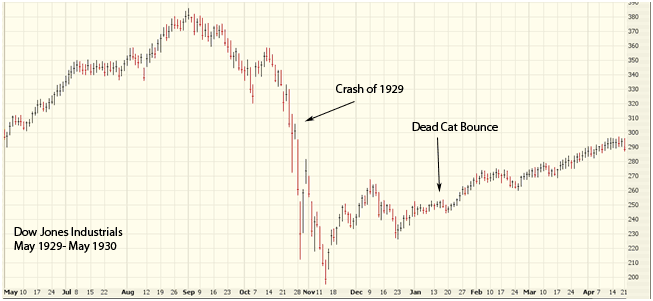
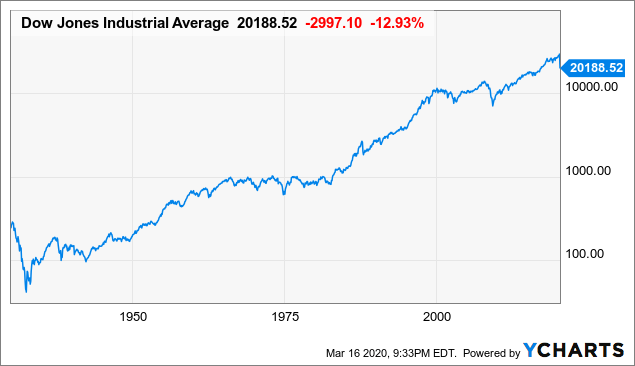
Yeah there’s more money floating around, so perhaps more people want to spend it, but why? Most people aren’t getting materially more stuff or even need that much more stuff, consumption’s already god damn conspicuous.
Maybe everyone can afford a jet ski all of a sudden? No, the stims didn’t really do /that/ kind of wealth expansion.
To me, this still looks like the bullwhip effect, which is expected to have an outsized effect on demand over at least a year or two.
Buyers, who got used to “just in time” shipping, got spooked by shipping delays and shortages from their suppliers, because of supply demand imbalances during shutdowns, and as a response they all put in orders for 2 to 3 times the amount they usually buy from their suppliers with the intent of rebuilding domestic stock so they don’t miss out on sales.
All of a sudden, aggregate demand explodes.
Shocking.