What a delightfully simple solution! I have to imagine if I were given this problem I would muck it all up with wristbands assigned to seats and a 5G/IOT network needing to be installed at every stadium and custom control logic needing to be written and customized for every stadium…
Whereas they just hook up an IR lamp and use the exact same lighting control procedures every stage tech knows blindfolded. Brilliant!
To be clear, this is a 38kHz modulated IR system, and it’s not likely to work like a DMX light.
38kHz IR is an extremely mature technology. The transmit and receive sides are made in huge volumes, complete with integrated modulators and demodulators. There’s a receiver in basically every piece of consumer A/V equipment and a transmitter in almost every remote control. You used to be able to buy them at Radio Shack!
Huh, I guess they are sweeping their IR transmitter around just like a visible light. I suppose one could map all the effects one intends to use onto DMX channels. I imagine that actual selection of those effects is done out of band.
The intention is likely that the transmitter takes DMX and sends out 38kHz IR, and the whole system of searchlight and individual armbands collectively becomes a DMX lighting. The optical wireless link part is an internal implementation detail.
I think the key thing is that IR allows the bands to work regardless of where the wristbands are located in the stadium. Additionally, they're probably using the IR to multiplex since the DMX 512 standard technically only supports 512 channels (which if each device uses a channel for color and channel for intensity, is only 256 supported devices).
With the IR technology, they are not addressing the individual lights. The bands just respond when IR splashes on them. The IR "spotlight" is just transmitting a command on repeat, and the bands display that one off command. DMX is just commanding the spot to move a certain way, and transmit a certain code.
They have a RF variant where they put the bands on each seat before the show. THOSE bands are individually addressed with RF, and their position known in advance to the setup. (If you move a band to another seat you'll mess it up). They have a special device that transmits RF across the whole venue. That device probably has a DMX hookup to take commands to transition to certain pre-programmed scenes and/or animations, and commands from a USB-connected PC.
It sounds like each band can be a part of (at least) 2 "groups", with the example showing groups 1-18 assigned to each stadium section, and 1-9 going all the way around from the first row to the highest/back row.
It's not hard to imagine that they've mapped each of those groups to a DMX channel, with the value indicating the color, and/or flash pattern, etc. Even if you're limited to 512 distinct groups (a single DMX universe), that's a lot of granularity. With that, any lighting designer/operator can use their console of choice to do scene and sequence programming -- no special training needed.
Yea, that sounds sane. The RF transmitter gets the DMX commands to groups, which then get translated to batches of RF bands, and then they just act on that.
I wonder if the RF system has enough bandwidth to show a movie or an animation at a decent frame rate, because that would be a neat effect.
IR has arbitrarily good spatial bandwidth — instead of a conventional moving light setup, it could be done like a projector — stick a DLP chip or an LED array at the focal plane. Then you could project a movie by literally projecting the movie as IR commands :)
I doubt the DMX part is coupled that closely to the IR. No one is bit-banging their IR protocol (or even its baseband) over DMX — even if it could work, the lighting console would need extremely special support to speak the protocol.
The DMX part would be like any other light: a pair of channels controls the coordinates to which the transmitter’s gimbal aims, one channel selects a color, one channel selects a command, a channel or two set some other parameters, etc. And the electronics in the transmitter unit convert all this to actual servo commands and to the encoded IR signal. There wouldn’t be a channel to select the active vs inactive state of the IR modulator, as entertaining as that would be. (DMX has a maximum frame rate of 44Hz. Following some links, the PixMob bits are 694.44 microseconds long. RS485 is plenty fast to carry the baseband signal, but DMX isn’t.)
(It’s been awhile, but I have operated DMX-controlled moving lights. And yes, of course I’m speculating.)
> I imagine that actual selection of those effects is done out of band.
This is a bit tiresome. :) Our conversation so far (paraphrasing)
You: “it is not DMX” Me: “it is DMX, here is the source” you: “i still imagine it is not”
Why is it so hard to believe that the effects are selected “in band” using DMX? You can imagine all you want all evidence points at that it is indeed just DMX.
> guess they are sweeping their IR transmitter around just like a visible light
For very clever reasons: (from the article) Since they are projecting infrared with moveable projector they can sweep effects around the stadium, and cover the projector with cut outs to make things like hearts.
That sounds like the wrist bands will auto-off their light when they stop receiving the IR signal. That's certainly possible and very simple which translates to high reliability.
Why do you say it's "possible"? It's what they're actually doing. I think practically nobody in this thread actually watched the linked video that explains the technology.
1x channel for lamp brightness (likely pinned to "on" to provide constant power). 2x channels for pan (double fine). 2x channels for tilt. 1x channel for gobo rotation. 1x channel for gobo selection. 3x channels for standard color mix (RGB) are then sent to the modulator controlling the emitter. = 10x DMX channels per fixture. +1 maybe for focus depending on the style of fixture.
Want to hack the system? Look into whether they are using wireless DMX. Probably not, but if they are you might be able to take over the individual instruments. And I mean own them because such signals are never encrypted and the lamps won't be in a position to be rewired during the show.
The HP 48G/GX calculator had a learning and preprogrammed IR remote control app that used its extremely powerful IR LED to could control TVs around 60-100' / 20-30m away.
I was at the Tampa concert last year, and I was so distracted by trying to figure out how they controlled the wristbands. They were randomly handed out at the door, and I had no idea what seat I was in. I went through the scenario to flash sectors to see where they were located and build a grid, but when I got home, I was floored at the IR solution. It was so simple.
And it isn't secure, but, it doesn't have to be. In theory someone can bring a high strength IR beamer thingy to an arena and draw penises or offensive texts on people's bracelets, but that's a manageable risk. Protecting against that would make the devices much more expensive.
I mean the components in this one are a few bucks at most, right?
Yeah. My first thought was "have fun smuggling any kind of bulky electrical equipment into a Taylor Swift concert, let alone a stage light. Security will not even be mad."
But on second thought, I think there might be an actual scenario to worry about: Activists hijacking the system to show political messages.
For that they'd "only" have to beam the IR to a small spot of the room (but with much higher "resolution" than the normal effects). As long as the symbol/text/whatever is still legible enough that people recognize it and can take pictures of it, they'd have achieved their objective.
Something like this might be possible with a much weaker, purpose-built emitter that could be hidden under clothing. Too much risk and effort for some dumb dick joke, but thinkable if people have some kind of political motivation.
As a "bonus", the first blame would probably fall on the unfortunate people whose wristbands lighted up with the message, while the real perpetrators - the ones with the emitter - remained hidden.
There is an easy fix as well though: As the system "paints" with digital signals and not light, the old lighting rule that colors mix only additively doesn't hold anymore - so you could add a "don't light up for the next 10 seconds" command to the wristbands and just have the stage beam that command continously whenever no effect is wanted.
Seriously asking: did those three go around to existing events and hijack them? e.g. Did they jump on stage and grab the microphones, or did they block traffic so nobody could get through? Or did they threaten people with violence for passing through having contrary opinions?
My understanding after reading "King" by Jonathan Eig (a fantastic biography btw, highly recommend to everyone) is that they didn't do that kind of stuff. They marched alongside traffic and were so non-violent that they allowed themselves to be hit with dogs and high-pressure water hoses without responding.
Rosa Parks especially was not like most "activists" today. She clamly and peacefully kept her seat on the bus. Maybe the former Google employee activists who refused to leave the conference room would be similar here, though there are of course differences.
I consider myself an activist, and I believe strongly that people need to help raise awareness because there is far too much ignorance and apathy out there, but I agree with GP and siblings that many of the activists today are harming their own cause by being obnoxious. Raising awareness in an empathetic way is the right way to do it, not trying to bully people into agreeing.
Rosa Parks “got in the way” by not leaving a seat she wasn’t legally allowed to sit in. She disrupted the flow of the white passengers. Today people would say “why doesn’t she protest elsewhere? She’s just getting in the way of bus riders who are trying to get to work.”
Sit ins were lead by MLK. People would go into restaurants, order food, and refuse to leave until they were served, despite being told they had to leave because of (legal) race laws. Today they’d be told they should protest elsewhere, that there is a time and a place, and they are hurting their cause by creating a disturbance.
Thoreau explicitly states you have a moral obligation to oppose unjust laws, etc. and resist governments, etc.
Empathetic awareness raising is one way and often not sufficient.
Read kings Letter from a Birmingham Jail.
1) determine if an injustice is actually being committed
2) attempt to talk with those committing the injustice to resolve it
3) prepare spiritually for non-violent resistance to evil
4) engage in non-violent resistance, protest only after all other means are exhausted, be prepared to be beaten and do not fight back, and 4 is only a means to get back to 2 — to open negotiations and discussions to restore justice.
The greatest “harm” to a cause is often passive silence.
Sitting by and critiquing activists is often a pastime of folks who stand to benefit from the preservation of the status quo and who have no real desire for immediate change.
Here is King reading his Letter from Birmingham Jail.
Thank you for the thoughtful response. You've given me much to think about!
I still intuitively see a difference between staying in the seat you paid for and got to first, and using a restaurant/diner the way it was intended, and people blocking traffic (which often includes hitting/attacking cars that try to get by). To be more equivalent though, I think Rosa Parks would have had to block the white passengers from getting on the bus, or the sit-in would block everybody from entering/patronizing the establishment. Had they done that, I think things would have turned out very differently because (rightly or wrongly) they cease to be sympathetic and reasonable figures in many people's eyes.
Other than that, I'm in full agreement with what you said. Also thank you for the Letter from Birmingham Jail read in his own words. So good :-)
> Rosa Parks “got in the way"..." "...She’s just getting in the way of bus riders who are trying to get to work
You had to quote "got in the way" so even you realize what a bad rebuttal it is. And sitting in a seat designed to be sat in is not getting in the way, not even a little bit. (Standing in the middle of traffic is actually what most people consider 'getting in the way')
> Sit ins were lead by MLK. People would go into restaurants, order food, and refuse to leave until they were served
So people went to an establishment that expected, and was designed, to serve patrons. And they "got in the way" by sitting at a table? Your words lose meaning when they're disingenuous.
> Sitting by and critiquing activists is often a pastime of folks who stand to benefit from the preservation of the status quo and who have no real desire for immediate change.
You ruined whatever tenuous point you were trying to make with this line. Blocking traffic for hours and hours because "my protest is more important than ANYTHING ELSE" is such an entitled, arrogant way to think.
They would actually take up all the seats and yes, they would prevent the “people” ie the white folks who the seats were designed for, from using the infrastructure for what it was intended - to serve white folks.
In my view, it’s entitled arrogant to assume that your subjective view is reality.
Imagine I come to your home and sleep in your bed.
I’m preventing you from sleeping and I’m trespassing.
You might not understand the actual impact of these laws.
When folks did sit ins they were actively preventing other people from using those services.
And these services were not for black folks.
Again, a white person goes to a diner and can’t eat because it’s filled with black people who refuse to leave until they are served. It’s against the law for them to be there, because they are black.
The spaces were designed for whites, like the drinking fountain that says “white only”.
you only think it's entitled and arrogant because you don't understand that protestors are protesting for people who don't have a voice, who's pleas fall on deaf ears like your own. your conception of protest is something an individual does to advance their own personal cause, so of course you only conceive of it as selfish - because you yourself do it for selfish reasons.
your selective memory of King and Parks is a disservice to their legacies. in "Letter from a Birmingham jail", MLK warns us about the kind of performative activism you espouse: https://www.csuchico.edu/iege/_assets/documents/susi-letter-.... here's where you should pay attention:
> I have almost reached the regrettable conclusion that the Negro's great stumbling block in the stride toward freedom is not the White Citizens Councillor or the Ku Klux Klanner but the white moderate who is more devoted to order than to justice; who prefers a negative peace which is the absence of tension to a positive peace which is the presence of justice; who constantly says, 'I agree with you in the goal you seek, but I can't agree with your methods of direct action'; who paternalistically feels that he can set the timetable for another man's freedom; who lives by the myth of time; and who constantly advises the Negro to wait until a 'more convenient season.'
> Shallow understanding from people of good will is more frustrating than absolute misunderstanding from people of ill will. Lukewarm acceptance is much more bewildering than outright rejection.
I sold my first software internationally at age 10; but I attended my first anti KKK protest on my dad’s shoulders at age 5.
Grateful I had people in my life who exposed me to direct action, freedom of speech and assembly, and I understand that the importance of helping others struggle for freedom.
> you only think it's entitled and arrogant because you don't understand that protestors are protesting for people who don't have a voice, who's pleas fall on deaf ears like your own. your conception of protest is something an individual does to advance their own personal cause, so of course you only conceive of it as selfish - because you yourself do it for selfish reasons.
You really sullied what was otherwise a very powerful comment with this unnecessary and unfair personal attack against GP.
In some ways this is an interesting microcosm of the activism we're discussing, where people take a worthy and often powerful cause, and self-sabotage it by being arrogant, condescending, and rude to the people they are trying to convert.
> you only think it's entitled and arrogant because you don't understand that protestors are protesting for people who don't have a voice, who's pleas fall on deaf ears like your own.
I do understand that, absolutely, and my ears aren’t deaf.
So you’re saying the protesters are justified in belligerent and deviant behavior because their cause is just? According to whom?
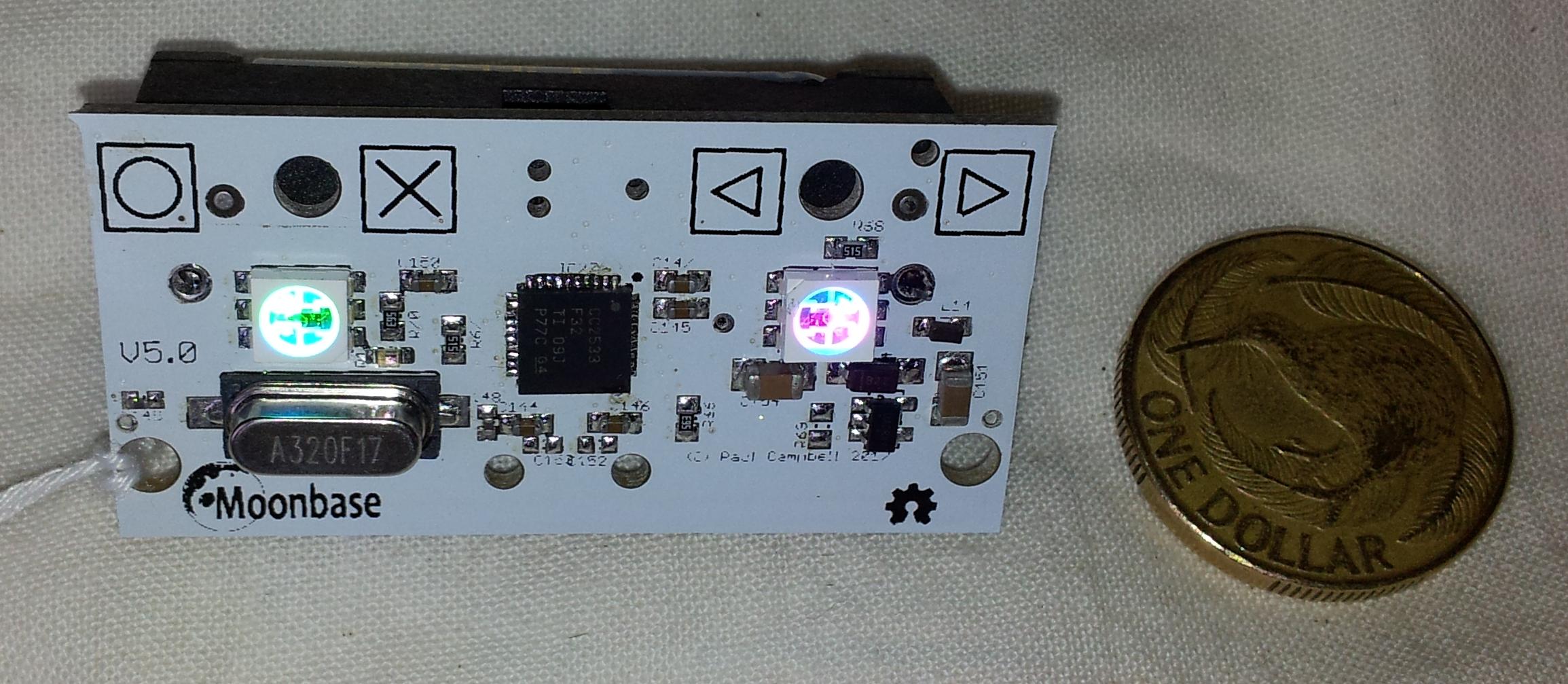
I built this: http://www.moonbaseotago.com/cheaprf/dev_playa1.png 10+ years ago = it uses a CC2533 RF/CPU zigbee core and forms a mesh net (it does SUOTA that way too) - we designed it for Burning Man but never swung the funding for tens of thousands of them
If you watch the video at the top of the article it looks like they actually have a couple options. Infared is one, but there's also bluetooth and RF control as well, and there's video of a feature where people are entering their seat information to participate.
At the first show I was at that had them, The International 5 in Seattle, I figured out they were IR very quickly by putting one in my backpack and seeing it didn't react when all the others did but did react as soon as I pulled it out (cloth backpack).
I then prime now'd a univeral remote to the arena. I had arena wifi for my work but I was in the stands. That didn't work (didn't pick up a signal). So that night I diassembled it and verfied it was basically a moulded wristband, micro, ir, leds, battery and connectors. so I next day'd an IR Toy to the arena. I was able to read a signal but couldn't reproduce it. It was kinda hard to live code during the event and my batteries kept dying.
I tried again the next year but got bored after that. It was annoying to have the setup at the ready when they flashed the lights especially as that was usually during the biggest moments of action. So I just sat back and enjoyed the show.
More evidence that we're losing our rights to general purpose computing!
(joking of course as that's not what is happening here. I am truly highly concerned about the loss of general purpose computing, but I also love poking fun at myself and group)
> I then prime now'd a univeral remote to the arena
I confess that I had to read this three times before I got it. And now I'm amazed at the times we live in. I was impressed enough that I live on a farm in the middle of nowhere, but I can order something on Amazon and possibly get it the same day, but being able to order something delivered to a public place and know that it will get there within hours just blows my mind.
For all the bad things you can say about Amazon, achieving this level of logistics is insane.
This works great until someone comes to the show with flashlight augmented with a simple chip to send the right frequency and does his/her own crowd painting :D
> I would muck it all up with wristbands assigned to seats and a 5G/IOT network needing to be installed at every stadium and custom control logic needing to be written and customized for every stadium
complex, expensive, difficult to deploy, doesn’t account for all factors (highly congested cellular networks are common in medium to high dense areas).
Reminds me of a few consultants I have had the “pleasure” to work with.
The attributes you list are correct, but you’re being a little unfair with your pretty obvious implications of at the very least incompetence of not malice.
People get used to building with the tools in their tool belt. When a problem arises that is better served with another tool, especially when working at a “lower level”, even if it’s more simple overall which this clearly clearly is, many many people are blind to it. I guarantee that you’ve done the same thing at least once.
I think this is a highly uncharitable response to someone clearly trying to speak humbly and honestly of their instinct towards a solution they obviously then recognized would be inappropriate.
Goes to show it's not always about greed or malice. Sometimes overengineering is at least well-intentioned. (Following the money often helps you determine what caused it.)


Whereas they just hook up an IR lamp and use the exact same lighting control procedures every stage tech knows blindfolded. Brilliant!